
Last updated November 17, 2026







Free written scope consultation - allowances, timeline, and change-order rules on paper before a single trade is scheduled
Construction Warning Signs: A Buena Park Homeowner’s Reference Guide
Most of the warning signs homeowners worry about in Buena Park aren’t the actual problem. A crack in the stucco isn’t a stucco issue. A stain on the ceiling isn’t a paint issue. A leaning fence post isn’t a fence issue. Each one is a symptom pointing back to something happening in the structure, the drainage, or the soil underneath. Read the symptom in isolation and you’ll pay to patch a surface that fails again the first wet winter. Read it as part of a chain, back to the cause, and you fix the thing that’s actually moving. This guide covers the five most common warning signs in Buena Park housing, how to tell cosmetic from structural, why the local clay soil drives so much of it, and a triage framework for deciding what to call about in 48 hours and what can wait.
Quick Answer
Most visible construction defects in Buena Park homes are symptoms of a deeper system failure, not the failure itself. A diagonal stucco crack usually points to foundation or framing settlement, not bad stucco. A ceiling stain points to a roof or plumbing leak, not paint. Learn to read the sign, trace it to the source, and decide urgency by width, orientation, and whether the two sides of the crack have moved out of plane.
Styles & brands we work with
- Kitchen remodeling
- Bathroom remodeling
- Home additions & ADU
- Roofing
- Windows & doors
- Driveway & pavers
- Fence
Table of Contents
- The Diagnostic Chain: Reading a Symptom Backward
- Stucco Cracks: Cosmetic or Structural?
- Efflorescence: What White Powder on Masonry Actually Means
- Interior Ceiling Stains and What They Reveal
- Driveway Heaving and Paver Movement
- Fence Post Lean and the Soil Beneath
- Orange County Clay Soil and Buena Park’s Post-War Foundations
- Warning Signs of Unpermitted Prior Repairs
- The 48-Hour / 30-Day / Cosmetic Triage Framework
The Diagnostic Chain: Reading a Symptom Backward
The single most useful skill for a Buena Park homeowner is learning to trace a defect backward. When you see a crack, a stain, or movement, the question isn’t “what do I put on that?” It’s “what caused that in the first place?” Every visible defect has a source, and the source is almost never what you’re looking at.
Here’s the chain, working backward:
- The visible symptom: a crack, a stain, a lean, a hollow sound, a powder deposit.
- The material that failed: stucco, drywall, paver, wood post, masonry.
- The mechanism that moved or wetted it: differential settlement, water migration, drainage failure, thermal expansion, or root pressure.
- The root cause: soil movement, roof or plumbing failure, missing flashing, undersized drainage, or an earlier repair that addressed the symptom instead of the cause.
Patching at level 1 without addressing level 4 is what we call a cosmetic repair. It buys you time, not a solution. In Buena Park, where a good part of the housing stock was built between the late 1940s and the 1970s, the root causes cluster around clay soil movement, aging roof and plumbing systems, and drainage that was never designed for the grading on the lot. Understanding which of those is at work before you spend money is the whole point of this guide.
If your concern turns out to be something bigger than a repair, like a whole-property renovation or a new backyard structure, that’s a conversation for a general contractor who can handle scope across multiple trades. You can read about construction in Buena Park to see how a full-property project gets structured.
Stucco Cracks: Cosmetic or Structural?
Not all stucco cracks are equal. A hairline crack under an eighth of an inch wide, following no particular direction, and not moving over months is almost always cosmetic – normal curing shrinkage or thermal movement in a three-coat stucco system. A crack running diagonally from a window corner, wider than a quarter inch, or showing displacement (one side bulging out past the other) is almost never just a stucco problem.
Here’s the criteria inspectors use to classify a crack:
- Width: Under 1/8 inch is usually cosmetic. Over 1/4 inch warrants a structural look. Between 1/8 and 1/4 inch, watch it over six months.
- Orientation: Vertical cracks at a corner or a seam of dissimilar materials are often benign. Diagonal cracks running from a window or door corner toward the plate line are the classic settlement signature.
- Displacement: If one side of the crack sits proud of the other by more than a coin’s thickness, the two sides have moved in different planes. That’s structural movement, not stucco shrinkage.
- Progression: A crack that stays put is stable. One that grows over months is active, and active movement needs a source identified.
In Buena Park, diagonal cracks from window corners are the one homeowners call about most, and they’re almost always tied to foundation movement or framing deflection. Patching over the crack with a flexible sealant and paint tells you nothing about what’s happening underneath. A trained contractor looks at the crack, checks the interior wall directly behind it, checks the slab or stem wall at the foundation, and sometimes takes a level reading across the floor.
For a stucco crack that traces back to exterior siding or wall failure on a broader scope, the fix may involve a full exterior renovation, and that’s a project to plan rather than patch. Roof and exterior systems are part of a broader renovation scope – the home additions & ADU team deals with foundation and framing issues tied to new structures and additions, which is often where this kind of movement gets caught early.
Efflorescence: What White Powder on Masonry Actually Means
Efflorescence is the white, powdery deposit that appears on the surface of concrete, brick, stucco, or pavers. It’s salt that was dissolved inside the material, carried to the surface by water, and left behind when the water evaporated. The salt is cosmetic. The water that carried it is not.
There are two main reasons efflorescence appears:
- New material curing. Concrete, mortar, and fresh paver installations naturally release water as they cure, and that water can carry surface salts. This kind is temporary and harmless if it clears within a season.
- Ongoing water migration. Water is finding a path into the material from a source that hasn’t stopped. That could be a roof leak, a poorly graded slope against the wall, a failed sealant joint, or missing flashing. Repeated efflorescence in the same place is the tell.
For a Buena Park homeowner, the diagnostic question is: does the powder come back after you clean it? If it returns within weeks or months, keep looking for the water source. On a stucco wall, efflorescence low near the grade line usually points to soil contact wicking water up, which can often be corrected by improving grading and clearing soil away from the stucco. Efflorescence higher up or in a specific patch points to a leak behind the wall.
On a driveway, paver joint sand and belgard-style systems can show efflorescence during the first wet season, and it’s typically cosmetic. Persistent return is usually a drainage problem under the pavers. If your driveway is showing chronic movement or water issues, it may need rebuilding, not resealing – that’s work covered under driveway & pavers, where the base layer and drainage are part of the design.
Interior Ceiling Stains and What They Reveal
A ceiling stain is never a paint problem. It’s water that got past something and reached the drywall, and the color and shape tell you a lot about the source. Every homeowner should be able to read the basic patterns.
- Brown, spreading ring: the classic active or recent leak. The ring is the leading edge where water is currently migrating. It’s happening now or very recently.
- Yellowish or pale brown with no ring: an older leak that stopped. Could be a repaired roof, a plumbing leak that was fixed, or a one-time event.
- Concentric rings (multiple full circles): repeated wetting and drying at the same spot. Each ring is a separate water event, and that’s a leak that keeps coming back.
- Gray, black, or greenish: potential mold growth. Stop the water source first, then assess, don’t paint over it.
- Sagging drywall with a bull’s-eye shape: active water weight, sometimes close to failure. That’s a call-now situation.
Chase the stain up. In a single-story Buena Park home, that usually means the roof, a valley, a chimney flashing, or an attic plumbing line. In a two-story, check the bathroom above. The specific location of the stain on the ceiling often points to something upstream: near the wall, near a vent, near a skylight, or in a corner where two roof planes meet.
Roof failure on this kind of sign is a same-day concern, and it’s often more cost-effective to consider a full roof replacement rather than chasing the same leak year after year, especially on an older Buena Park home with original roofing. If the water has been going on long enough that the sheathing and framing are suspect, the scope moves beyond roofing alone and into structural repair, which is where a full-property contractor helps rather than a roofing specialist alone.
Driveway Heaving and Paver Movement
A concrete driveway that’s heaved up a lip at a joint, or a paver driveway where individual units are sitting proud of the field, both tell you the same thing: something moved under the slab or the paver base. The mechanism matters more than the visible lift.
The three main causes of heaving in Buena Park driveways:
- Tree root pressure. A nearby tree’s roots lifting the slab or paver base. Always check the nearest tree.
- Soil movement. Expansive clay under the driveway expanding when wet and shrinking when dry, which we’ll cover in the next section.
- Water under the base. A failed subbase, poor drainage, or a downspout dumping against the driveway, which saturates the base and drives frost-free heaving when it dries unevenly.
Paver driveways are more forgiving than concrete because individual units can move without cracking. A single heaved paver in a well-built Techo-Bloc or Belgard system is usually a localized base issue that can be repaired by pulling and resetting the units. A whole field that’s rippling in a wave pattern is a base layer that’s failing, which usually needs a rebuild. On a concrete slab, once it heaves and cracks across a joint, there’s rarely a repair that doesn’t involve partial demolition, and that often tips the economics toward a new paver driveway instead of pouring a new slab to heave again.
The diagnostic step is simple: look at the low point in the heave and figure out where the water goes when it rains. If it pools, you’ve found your cause. If it doesn’t, look at the nearest tree.
Fence Post Lean and the Soil Beneath
A leaning fence post is the most misdiagnosed warning sign in the whole list. Homeowners see lean and assume the post rotted or the wind got it. In Buena Park, that’s usually the wrong diagnosis. The post is fine. The soil around it moved.
Two things cause post lean here:
- Clay soil saturation and drying: the same expansive clay that heaves a driveway swells against a fence post in the wet season and shrinks back in the dry season, gradually working the post loose in its hole over years. One post leaning in a dry spell, straightening a little when the winter rains come, is a soil-movement signature.
- Poor drainage along the fence line: if the lot drains toward the fence, or a neighbor’s yard drains onto yours, the post hole fills up and saturates. Wood in a wet hole rots, but metal in a wet hole heaves.
Check for the diagnosis in this order: is the post itself soft or split at the base (rot), is the soil line around the post sunken back (shrinkage), is there a drainage path leading to the post (water), or is the whole fence line waving together (base failure). A single leaning post usually means local repair. A whole section waving is a base problem and calls for a full rebuild of that run.
When a fence is being rebuilt, the material and post-setting method matter more than most homeowners realize in this soil. A commercial-grade system like Master Halco or Ameristar with properly set posts and improved drainage is more likely to stay plumb than lumber-yard stock set shallow in a hurry – the full range of materials and setting methods is covered under fence installation.
Orange County Clay Soil and Buena Park’s Post-War Foundations
Buena Park sits on soil that a good part of it is expansive clay. That matters because clay doesn’t sit still. It swells when it takes on water and shrinks as it dries, and it does this cycle every year. On a well-built foundation, that cycle is absorbed without consequence. On a foundation built before modern soil preparation standards, it can move the house enough to crack stucco, rack door frames, and lift a driveway corner a half-inch a season.
The pattern in Buena Park’s post-war housing stock is specific:
- Slab-on-grade foundations predominate in the neighborhoods built from the late 1940s through the 1960s. These are vulnerable to differential movement, meaning one corner lifts or settles more than another.
- Raised foundations with crawl space or stem wall appear in some of the older homes. These transfer soil movement to the stem wall, which can crack at the mortar joints.
- Grading matters more than the foundation type. A lot that drains away from the house is stable. A lot that drains toward it or pools near the foundation pushes movement year after year.
What that means diagnostically: a diagonal crack that appears after a wet winter followed by a dry summer, in a house over 40 years old on the western side of Buena Park, is more likely tied to soil movement than anything in the stucco itself. Compare the door frames on the same wall as the crack – a door that sticks in dry weather and swings free in wet weather is confirming the soil-movement diagnosis. A crack that developed without any season change is more likely tied to a framing or connection issue. Both types of finding get caught on a walkthrough that includes a level, a straight edge, and a meter reading – tools we use on every diagnostic call.
If movement has progressed far enough to affect the foundation or the framing that supports a new addition or ADU, the fix has to come before new construction, not after. That’s the point at which we get honest with a homeowner about sequencing.
Warning Signs of Unpermitted Prior Repairs
This is the warning sign most homeowners overlook, and it’s often the riskiest. A previous repair that was done without a permit isn’t just an inconvenience – it can have concealed structural damage or shortcutted the code requirements that would have caught the underlying problem. The visible sign of an unpermitted repair is one that doesn’t quite fit the surrounding work: a patch of stucco with a different texture or color, a roof patch in a straight line rather than matching the shingle pattern, an outlet or fixture that doesn’t belong, a bathroom where the drain comes up through the floor in an odd place, or a wall that was added or removed without matching the rest of the room’s finish.
Things to check for:
- Patch work with a different texture or color: an obvious tell of a stopped-leak or stop-the-crack fix, and often hiding the actual defect under cosmetic work.
- Roof coverings with mismatched shingle runs: evidence of a past leak repair that may have been done without addressing the flashing or underlayer.
- Interior walls that don’t line up with exterior windows: a common sign of a wall moved without a permit, and a sign the structure may have shifted.
- Unusual plumbing, electrical, or HVAC configurations: nonstandard rough-in, exposed conduit, or a water heater in the wrong place.
- Records gap: a quick check with the city’s building department reveals whether permits were pulled for a past addition, remodel, or re-roof.
The reason to be strict about this is that an unpermitted repair on a symptom (level 1) can bury the cause (level 4) under new material. When the repair reopens the same defect in two years, the excavating scope is bigger and the structural exposure has had more time to spread. If you find one of these signs, get a licensed contractor to evaluate before you buy or renovate, and plan on permits for anything structural or major.
The 48-Hour / 30-Day / Cosmetic Triage Framework
Not every warning sign needs the same urgency. Use this framework to decide whether to call now, plan, or leave it alone.
48-hour call – active risk to safety or major damage:
- Ceiling stain with sagging drywall or a bull’s-eye shape
- Diagonal crack over 1/4 inch with visible displacement
- Efflorescence returning within weeks after cleaning
- A leaning post pulling an entire fence section out of line
- Any sign of a live electrical or gas issue (stop reading, call now)
30-day planning window – structural concern, not immediate:
- Crack in the 1/8 to 1/4 inch range that isn’t moving
- A single heaved paver or a small settled patch in a driveway
- A ceiling stain with no ring and no spreading
- One leaning fence post in otherwise-plumb fencing
- Suspected unpermitted prior work you want evaluated before a purchase
Cosmetic – watch only:
- Hairline stucco cracks under 1/8 inch with no movement
- First-season efflorescence on new masonry or new pavers
- A single small patch of paint peeling on a wall with no underlying moisture
- Minor paver joint sand dispersion
Where the phone call belongs is the important part. We answer 24/7. Fast dispatch from 7am to 7pm, Sunday through Friday. Any warning sign in the 48-hour column should be photographed and called in, not left for a future project. Signs in the 30-day column can be walked through with a free estimate. Cosmetic signs are ones to record with a date and a photo and compare in six months – sometimes that’s the most useful thing you can do as a homeowner.
If a 48-hour sign is roof-related, the scope stays with roofing. If it’s a foundation issue that will affect future scope like an ADU or addition, the call goes to home additions & ADU. And if the sign points to several systems at once – a ceiling stain under a roof leak that’s also got moisture into the kitchen cabinetry below – that’s when a single contractor beats coordinating subs from three trades.
Common Mistakes to Avoid
- Patching the visible symptom without diagnosing the source. Sealant over a diagonal crack or paint over a ceiling stain is a two-month response to a ten-year problem. Find the mechanism first, then fix it.
- Assuming a stucco crack is stucco’s fault. It almost never is. Foundation and framing movement is the driver in this soil.
- Ignoring a stain because it’s “not spreading right now.” Rings on a ceiling are usually on a yearly cycle that lines up with rain, not with your attention span.
- Choosing a repair by which trade is around. Calling a stucco guy and a plumber and a roofer separately for a single moisture problem means three diagnoses and no one accountable for the whole.
- Skipping the permit check on prior work. The city building department has the paper trail. A ten-minute check can save a full re-investigation later.
- Buying a house with a fresh cosmetic patch and no records. Fresh paint over an unresolved wall or a recently re-patched roof can be the tip-off for unpermitted work. Ask when the work was done and who did it.
- Assuming new material is a rebuild. A new coat of paint on a stucco wall doesn’t address a foundation crack. Match the fix to the diagnosis, not to the look.
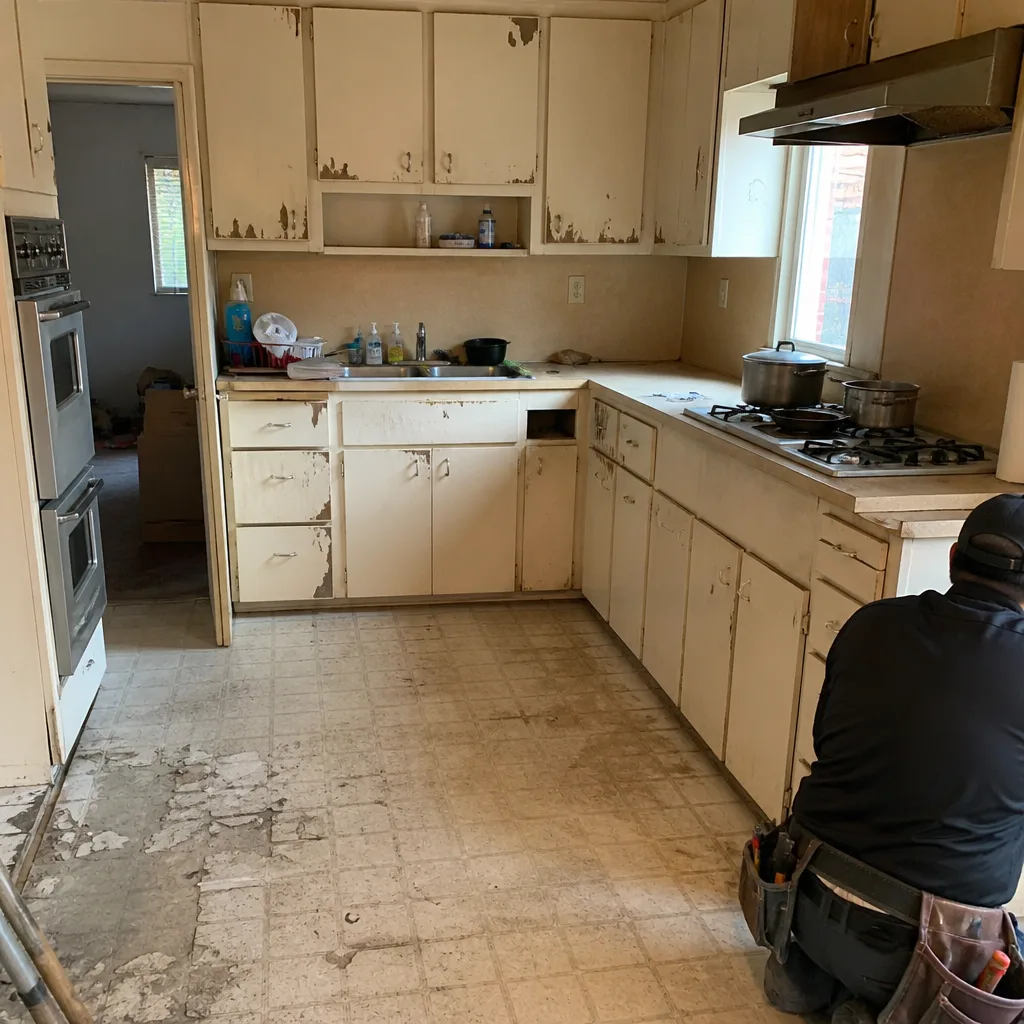
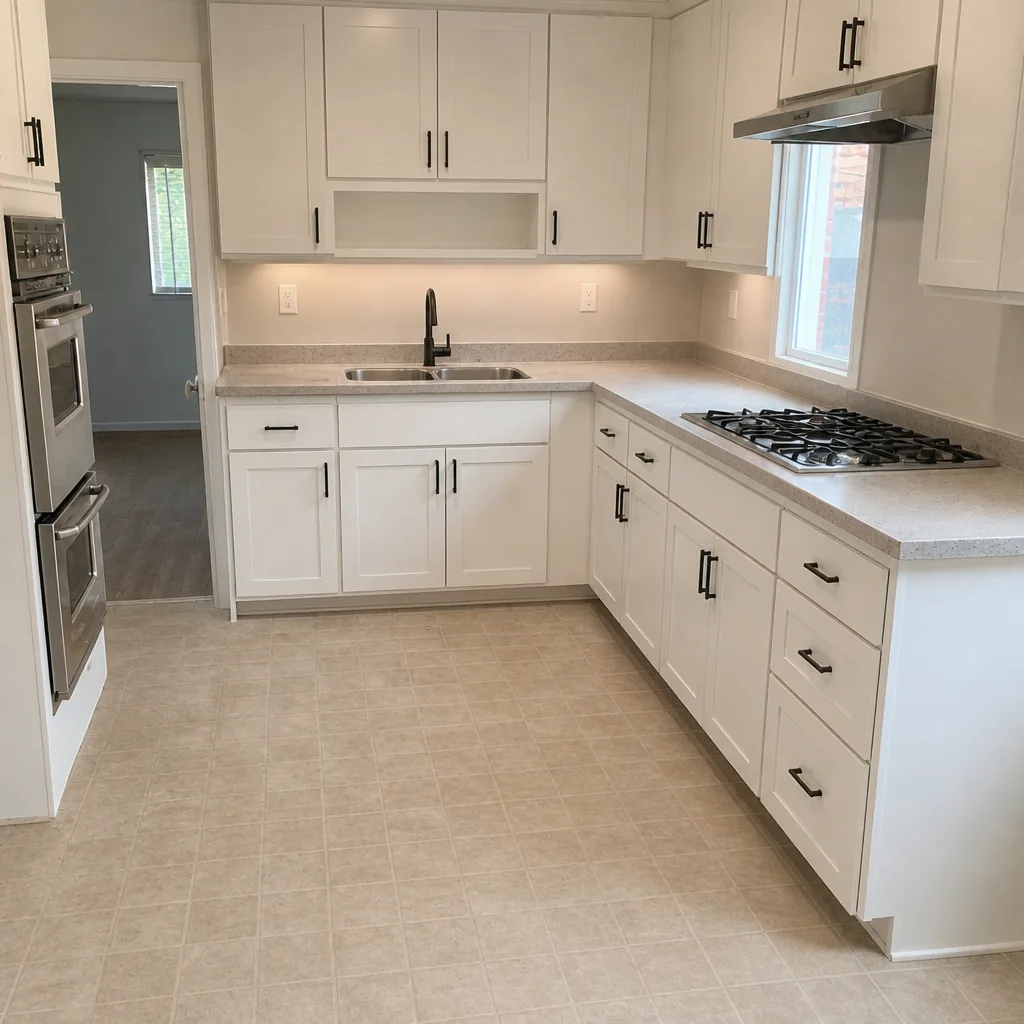
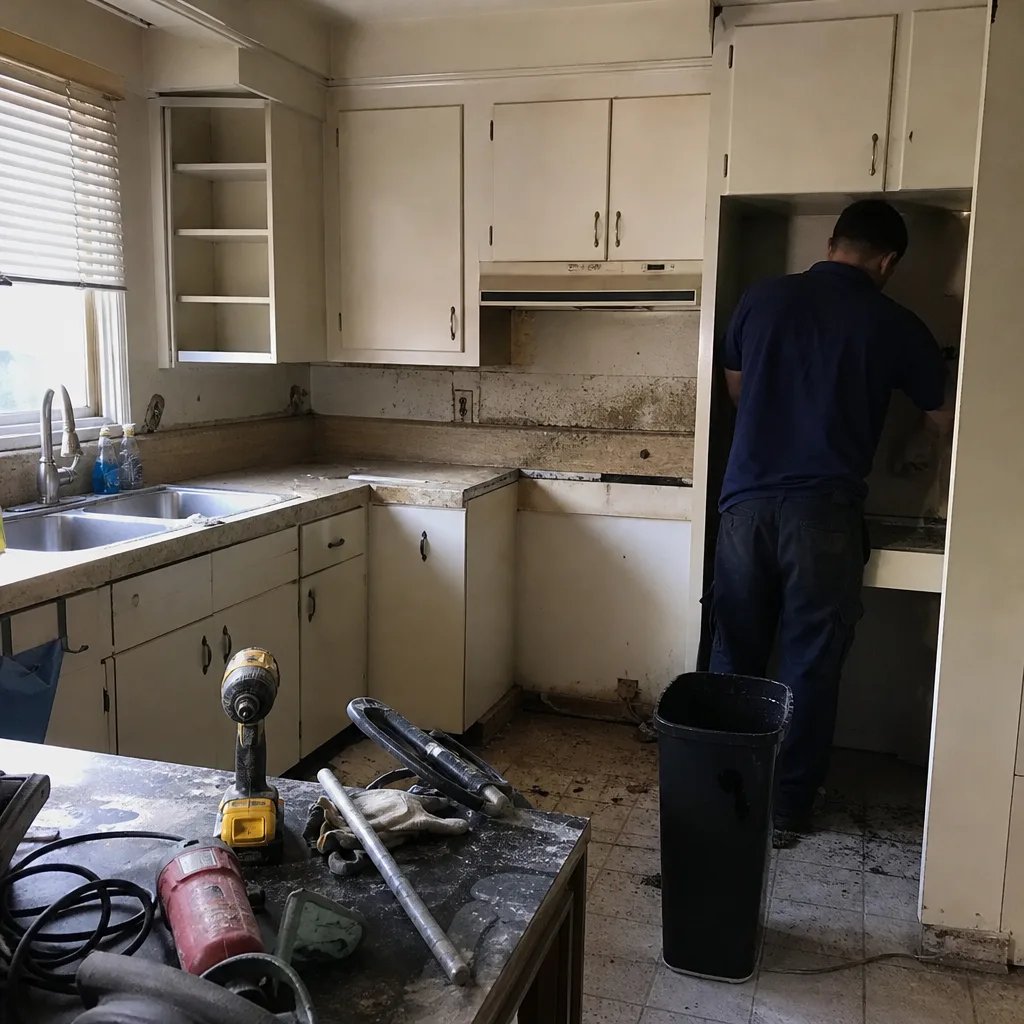
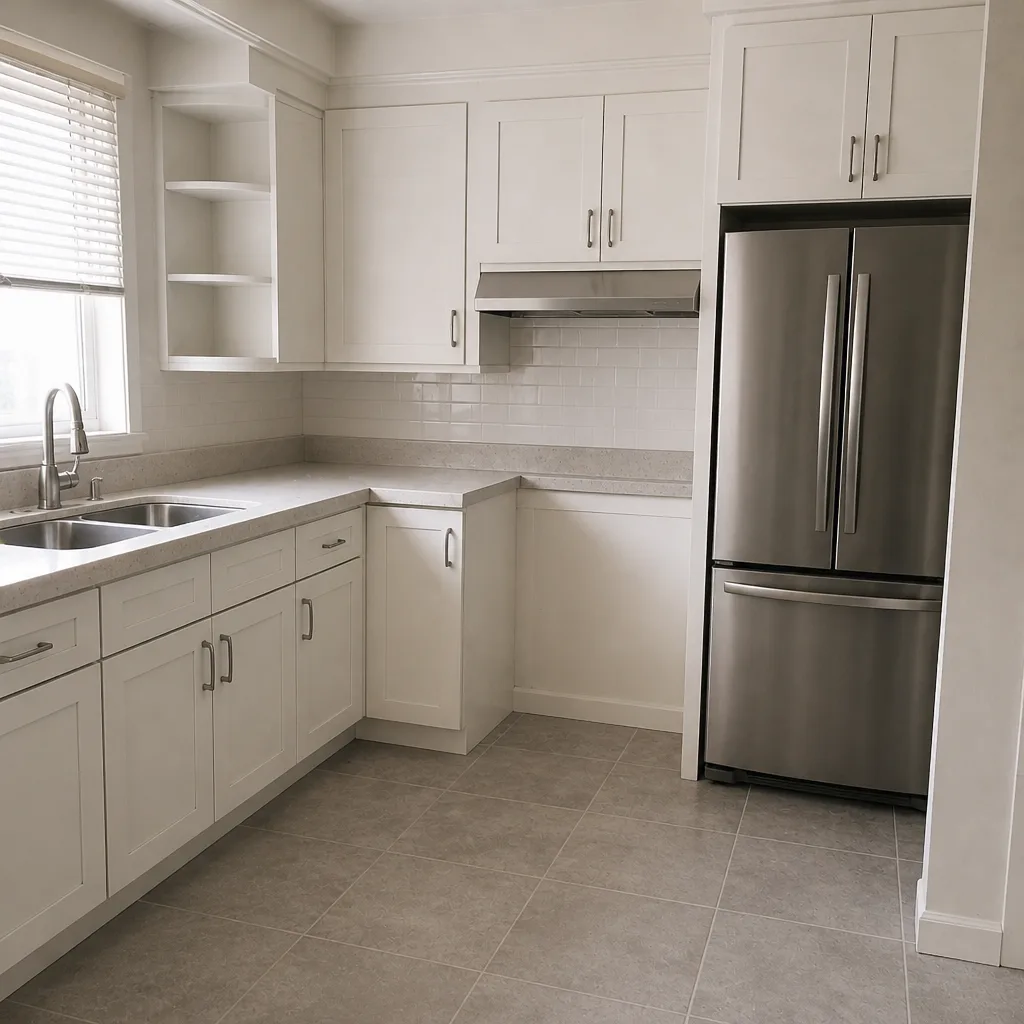
See the difference
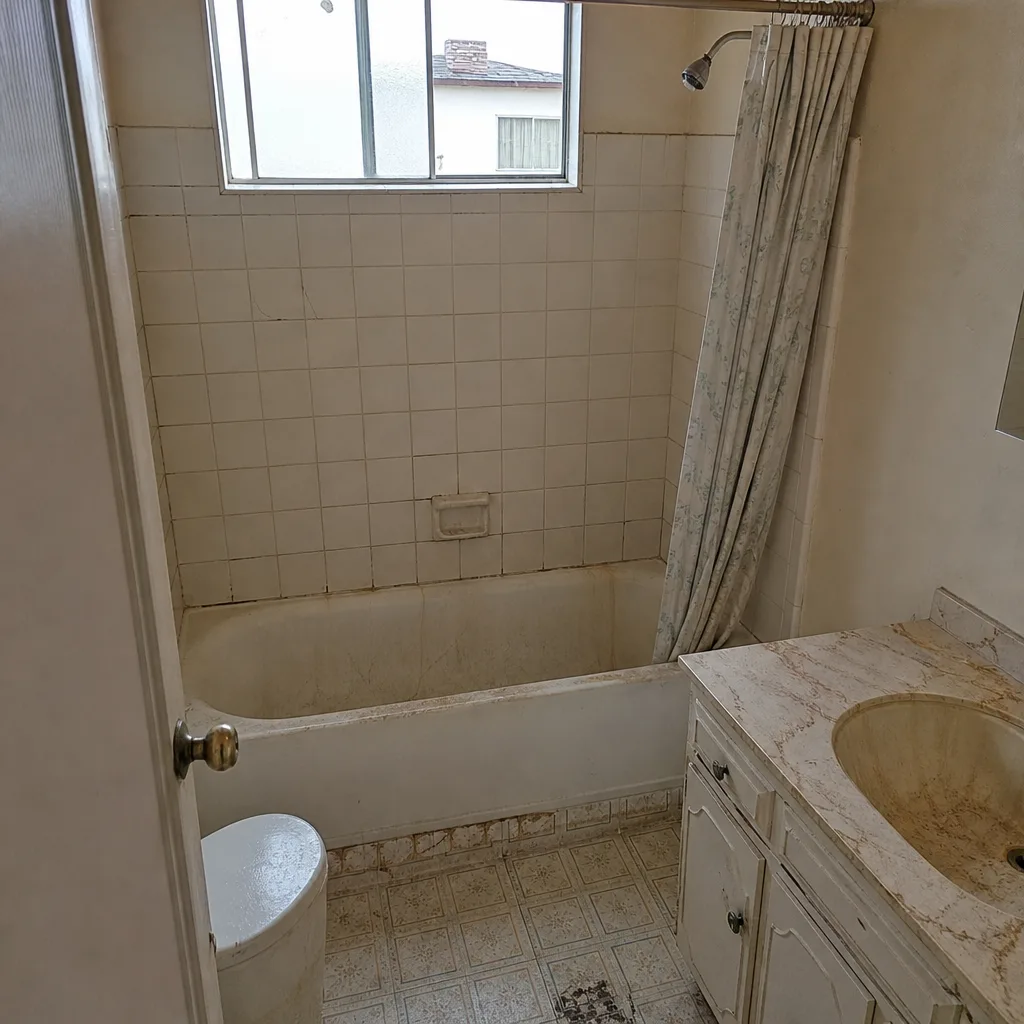 Before
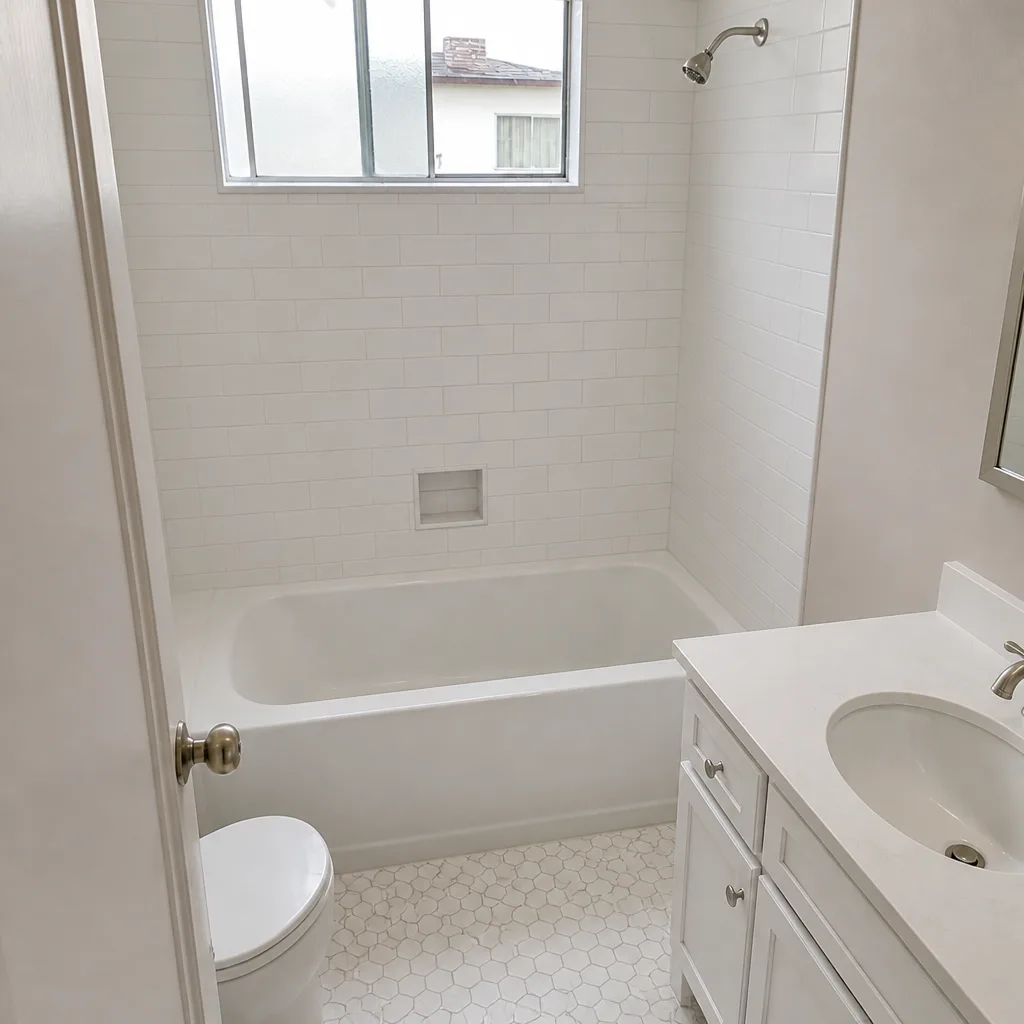 After
 Before
 After
 Before
 After
When to Call a Professional
Call for a trained eye when a sign appears in more than one place at once – a stucco crack plus a sticking door, or a ceiling stain plus a roof valley above it – because those are rarely coincidences. Call when a defect is over 1/4 inch, displacing, or returning after a repair. Call when you suspect unpermitted prior work, before you buy or renovate. Call when the scope crosses systems – a leaking roof that’s also reached the kitchen ceiling below and the cabinets, or an exterior wall that’s affected interior finish – because a single accountable contractor is more efficient than three subs giving contradictory opinions. Call when you’re about to spend money on a patch and you’re not sure the patch is the right fix. Construction Buena Park offers free estimates in Buena Park – call (833) 348-5952. We answer 24/7. Fast dispatch from 7am to 7pm, Sunday through Friday. Our technicians have up to 14 years of experience with signs like these across Buena Park homes.
Frequently Asked Questions

No, but it’s the most common cause. A diagonal crack running from a window or door corner toward the plate line, especially one that appears after a season change, is the classic signature of foundation or framing settlement. A diagonal crack from an impact point or with no displacement and no seasonal change is more likely a normal shrinkage or thermal crack. The difference matters because the repair is completely different. Call (833) 348-5952 for an exact evaluation – estimates are free.
Over 1/4 inch with displacement of one side past the other is a call-now threshold. Between 1/8 and 1/4 inch without displacement is a watch-over-six-months situation. Under 1/8 inch with no movement is usually cosmetic. Width alone isn’t the only test, though: orientation, displacement, and whether the crack is active all matter. A trained contractor will read all three before giving you a verdict.
Because the post isn’t the problem. In Buena Park’s expansive clay soil, a post hole that gets water in winter and dries out in summer gradually works the post loose in its hole over years, and if you reset it in the same soil, it’ll do the same thing again. The fix is a post set with proper drainage away from the line, and a system better suited to soil movement than plain lumber-yard stock. Call (833) 348-5952 for a free estimate on the repair or the full rebuild.
No, not until you know the water source has stopped. A stain with a ring is water that’s still active, and paint will fail or the stain will return within a season. A pale stain with no ring that hasn’t spread in a year is likely a closed past leak, and can be primed and painted after confirmation. Call (833) 348-5952 for an exact diagnosis – estimates are free.
A patch that doesn’t match the surrounding material, especially fresh paint over a recently patched wall, or a roof repair in a straight line. These are cosmetic fixes on top of unknown structural work. The second tell is a records gap at the city building department. Before buying or renovating a Buena Park home, get both checked.
No. Every project we take on is quoted as a written line-item estimate that sets the final price, and we don’t do change orders on the quoted scope. If a diagnostic walkthrough uncovers something unexpected under a surface, we pause and quote that separately before touching it. Fixed pricing, no surprises, and a free estimate to start – call (833) 348-5952.
The Bottom Line
The five signs in this guide – stucco cracks, efflorescence, ceiling stains, driveway heaving, and fence lean – are almost never the problem themselves. They’re the surface read of something happening in the soil, the roof, the plumbing, or the framing underneath. Learn to read them backward, use the width/orientation/displacement test to tell structural from cosmetic, sort what you’re seeing into the 48-hour, 30-day, and cosmetic columns, and check for unpermitted prior work before you spend money on a repair that could conceal the cause. The Buena Park housing stock sits on clay soil that cycles seasonally, which makes this discipline matter more here than in most of Orange County. If you’re not sure which column a sign belongs in, call and let a trained eye look before you patch.
One contractor from the driveway to the roofline is the whole idea behind how we work. If the warning signs you’re seeing cross systems – a foundation issue affecting a future ADU, a roof leak that’s reached interior finish, a paver driveway and fence line failing together – the diagnosis and the repair should come from one accountable point of contact. Call Construction Buena Park at (833) 348-5952 for a free estimate. We answer 24/7. Fast dispatch from 7am to 7pm, Sunday through Friday.
Written by the team at Construction Buena Park.