
Last updated November 17, 2026





Free written scope consultation - allowances, timeline, and change-order rules on paper before a single trade is scheduled
Construction Emergency Preparedness Guide for Buena Park Homes
The most dangerous moment after a Santa Ana wind event usually comes after the wind stops. Homeowners climb ladders to inspect roofs and fascia boards they’ve never actually looked at, and they can’t tell whether the boards under that first row of shingles are still anchored to anything solid. That’s the gap this guide closes. We’re not going to hand you a generic emergency kit list, because in Buena Park the threats that matter are specific: wind events, flash flooding off the Coyote Creek corridor, and seismic movement that punishes older construction. By the end, you’ll know your home’s weak points, how to document them before and after an event, and what to do when a repair can’t wait.
Quick Answer
Construction emergency preparedness for a Buena Park home means identifying three specific vulnerabilities common in pre-1980 housing – unbolted mudsills, unreinforced masonry fences, and unsealed attic vents – documenting your home with photos and permit records before an event, and knowing the exact inspection sequence after a windstorm or flood before you touch anything or file a claim. Preparation is mostly paperwork and observation, not sandbags in the garage.
Styles & brands we work with
- Kitchen remodeling
- Bathroom remodeling
- Home additions & ADU
- Roofing
- Windows & doors
- Driveway & pavers
- Fence
Table of Contents
- The Three Structural Vulnerabilities in Buena Park’s Older Homes
- How to Assess Your Home’s Weak Points Without a Contractor Visit
- What to Inspect and Document After a Santa Ana Wind Event
- Coyote Creek Flood Risk and Your Crawl Space, Garage Slab, and Driveway
- How California’s Price-Gouging Law Protects You After a Disaster
- The Pre-Emergency Documentation Checklist
- When a Repair Crosses From Cosmetic to Structural
- Common Mistakes to Avoid
The Three Structural Vulnerabilities in Buena Park’s Older Homes
Buena Park’s ranch-era housing stock went up during a long stretch when seismic anchoring requirements were far looser than they are today. Three failures show up again and again when wind or ground shaking tests these homes, and each one has a visible early warning if you know where to look.
1. Unbolted Mudsills
The mudsill is the treated lumber plate that sits directly on your foundation, and it’s the connection between your entire house and the ground. In many older Buena Park homes, that sill was toe-nailed during construction – driven at an angle with nails and nothing more. A bolted or strapped sill resists lateral movement; a toe-nailed sill can let the frame shift off the foundation. Crawl space access makes this one of the few vulnerabilities you can check without cutting into walls. Look at the sill plate along the foundation from underneath, and note whether you see anchor bolts with nuts and washers spaced along it, or just nails. You don’t need to diagnose whether the bolts are adequate – you need to know whether your house is bolted at all, because that answer changes how urgently you treat the rest of the structure.
2. Unreinforced Masonry Fences
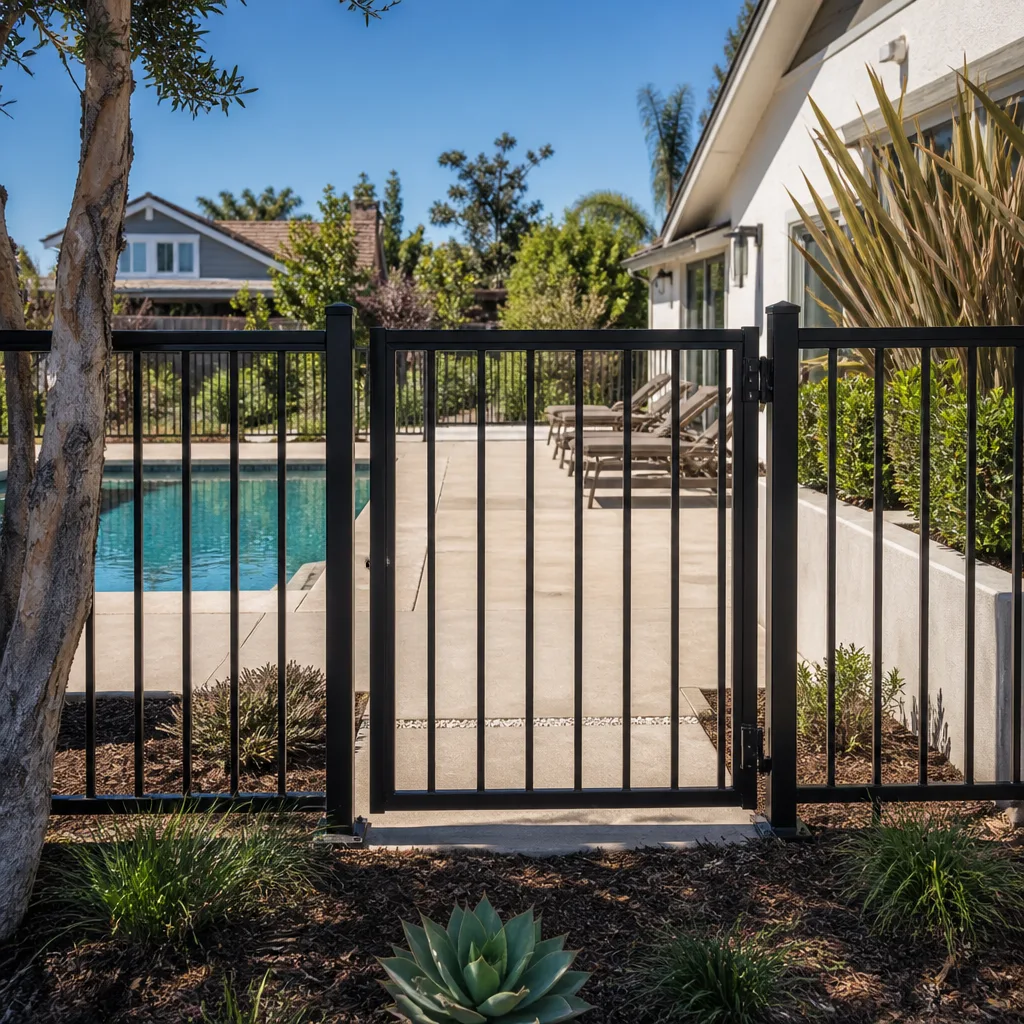
Block walls and brick fences are everywhere in Buena Park, and a tall unreinforced masonry fence is a serious hazard in ground shaking. An ungrouted or lightly reinforced block wall can lean and topple, and a wall shared with a pool or a children’s play area raises the stakes. Warning signs worth photographing and noting: visible tilt or lean in the wall, cracks that step diagonally through the mortar joints, gaps opening at column bases, and any wall built on an unreinforced footing.
3. Unsealed Attic Vents and Roof Penetrations
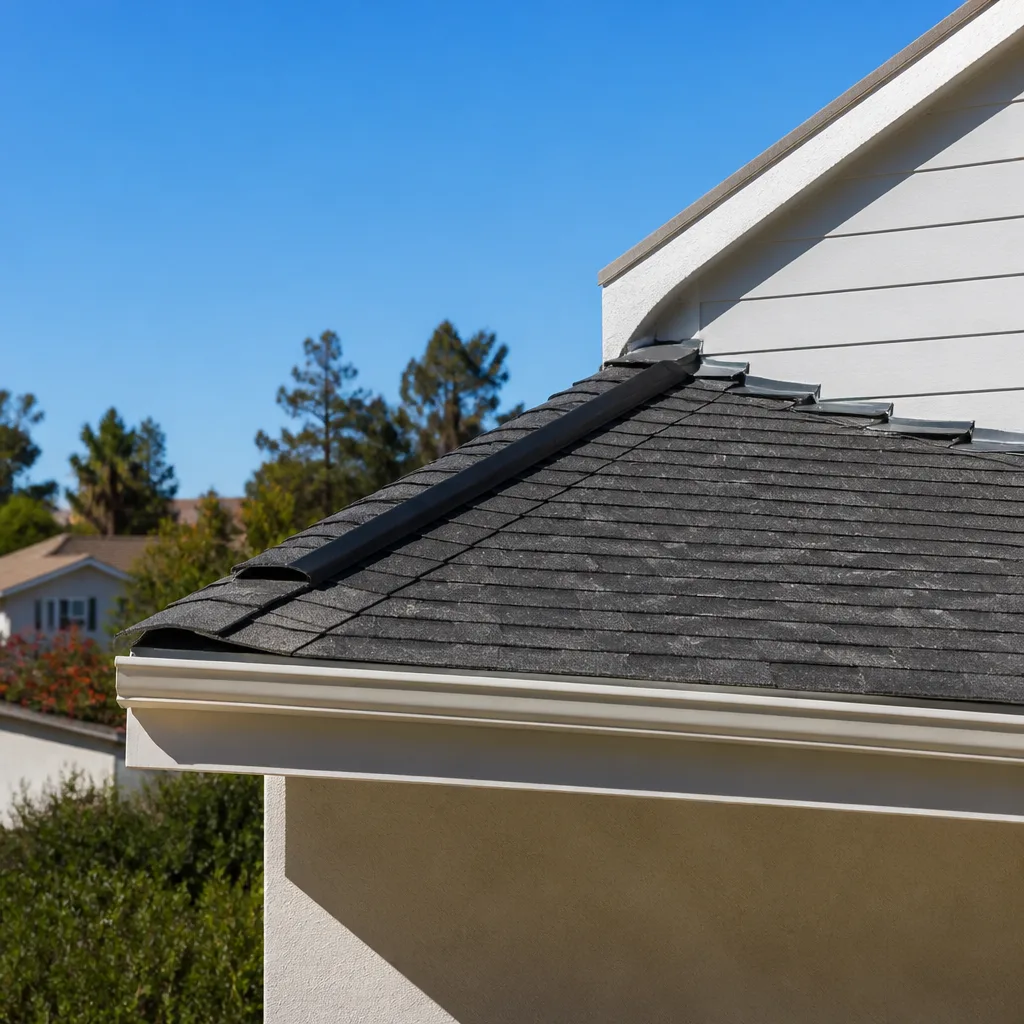
Wind-driven rain finds every unsealed penetration: bath fan vents, dryer vents, and gable or soffit vents with gaps around their frames. In a windstorm, water is pushed horizontally and gets in places a vertical rain never reaches. An unsealed vent opening also lets wind load the underside of your roof sheathing through the attic, which is exactly the pressure the shingles are fighting from above.
How to Assess Your Home’s Weak Points Without a Contractor Visit
Most of the assessment work is observation, and it takes an afternoon. The rule is simple: look, photograph, write it down. Don’t attempt to fix structural connections yourself. Here’s the sequence we recommend for any Buena Park home.
- Walk the perimeter of the foundation. From outside, note cracks in the foundation stem wall and any separation between the wall and the siding. From the crawl space, note whether the sill plate shows bolt heads at regular spacing.
- Photograph every fence section. Get one straight-on shot and one from an angle that shows lean. Note the material and the height of each run.
- Walk the attic with a light. Look at the framing around vents and penetrations. Note any daylight you can see through to the outside – that’s a leak path.
- Note the roof covering and its age. Check whether any shingles are lifted or missing along ridges and hips, which fail first.
- Chart your site drainage. Mark where water would flow if a heavy rain overwhelmed the gutters, and check whether the ground pitches away from the foundation or back toward it.
- Save it all in one folder. Photos with dates, in a cloud folder you can open on your phone.
That folder matters more than you’d expect. When you call a contractor or an adjuster, a dated photo of a fence that was upright and plumb before a storm is evidence; a photo you take afterward is just a picture of damage. This is also where the full-scope advantage of hiring one contractor shows up – the same team that looks at your foundation also assesses the driveway & pavers and the fence installation on the same visit, so your documentation covers the whole property in one pass.
What to Inspect and Document After a Santa Ana Wind Event
Immediately after a Santa Ana wind event, the correct sequence is: photograph everything from the ground before you move anything, then inspect the roof only if you have safe access and the equipment for it, and then call your insurer. Most homeowners do it in reverse, and the damage documentation ends up unusable. The adjuster needs a clean before-and-after record, and the contractor needs it too.
What to Photograph Before You Touch Anything
- Each damaged area from the same angle as your pre-event photo, plus one wide shot showing the surrounding structure.
- Close-ups of lifted, torn, or missing shingles, and any debris clustered at the base of a wall – that tells an inspector where wind pressure was concentrated.
- Interior water stains, with a reference object in frame for scale.
- The fence line and each panel, photographed from both sides if the damage is on a shared boundary.
- Anything that was blown into or against the house, since it can be relevant to what struck the structure.
What Homeowners Routinely Destroy
The most common mistake is cleanup before documentation. Sweeping up the broken shingle pieces removes the only physical evidence of the covering that was on the roof. Pulling a fallen fence away from the wall removes the position evidence of what the wall was attached to. Moving a fallen vent cover means nobody can tell whether the opening was wind-loaded interior pressure or just impact. If you have to remove something for safety, photograph its position first. If water is entering, contain it – but don’t tear into the wall or ceiling until an adjuster or contractor has seen the damage. If a roof section is actively exposed, that’s when a temporary protective measure is warranted, and it should still be documented before and after.
A temporary fix that keeps water out is not the same as a repair. Keep those two jobs separate in your head throughout the whole process, because the insurance claim covers the repair scope and the temporary cover is a stopgap you should photograph and note separately.
Coyote Creek Flood Risk and Your Crawl Space, Garage Slab, and Driveway
Flash flooding in this part of North Orange County follows the low ground near the Coyote Creek corridor, and it rarely looks like a river through your yard. It looks like water pooling against your garage door threshold, water rising in a low spot along the driveway, and soil around the foundation going from damp to saturated in an hour. The moisture itself is less costly than where it ends up.
Crawl Space
A crawl space that takes on water becomes a long-term moisture problem even after it drains. The soil under the foundation stays wet, the vapor barrier gets buried in silt, and the sill plate – the one you need dry – stays damp for weeks. Check whether your crawl space has a vapor barrier at all, whether the grade inside it slopes toward or away from a drain, and whether the access door is at grade level or lower. If your lowest exterior point is the crawl hatch, the water is going in there first.
Garage Slab
A slab that sits below the driveway grade funnels water toward the door, especially where the driveway meets the threshold and the joint has opened. Water that gets under the slab edge and into the wall base can travel a surprising distance. Check the threshold joint and whether the driveway pitch carries water toward the door or away from it.
Driveway Drainage
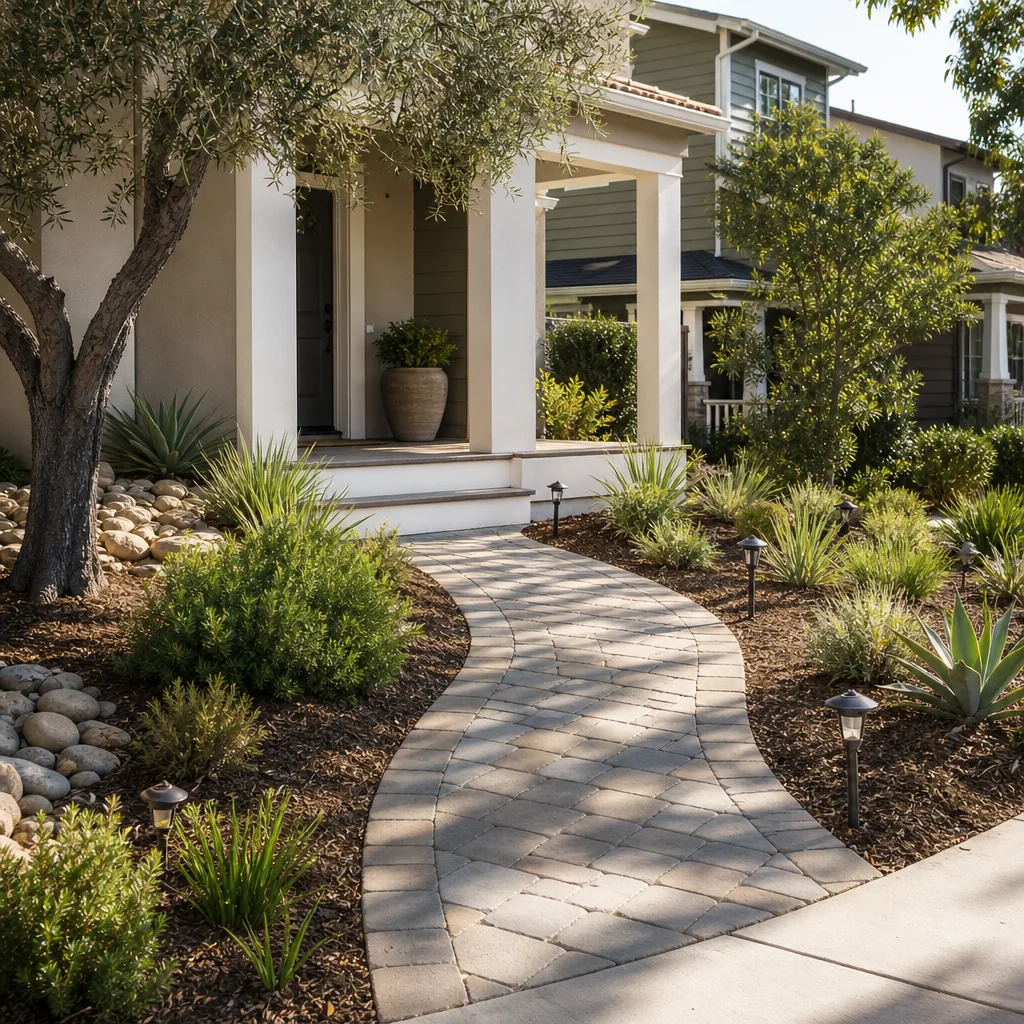
Hardscape projects are the place where drainage is either designed correctly or discovered by trial. A driveway & pavers installation built with a proper cross-slope and a designed edge restraint sheds water where you want it. Paver systems from Belgard, Unilock, and Techo-Bloc have published load ratings and dimensional specs that make a designed slope calculable, not guesswork. Where drainage is a real concern, we build on those systems rather than a generic base. If your driveway has settled and now pitches back toward the garage, that’s a drainage repair, not a cosmetic one.
Also worth checking before the first storm of the season: downspouts that dump against the foundation, the direction the ground pitches within six feet of the house, and whether the fence line has any graded berm that could pond water against a boundary wall.
How California’s Price-Gouging Law Protects You After a Disaster
California’s price-gouging law, AB 2765, caps how much a business can raise prices on goods and services needed after a declared state of emergency. The protection applies to repair work, building materials, and emergency services. That matters to Buena Park homeowners because after a regional event, out-of-area contractors often sweep in and charge whatever the market will bear while demand is high.
What to Keep
- A written, line-item estimate before any work begins, with the scope and the materials spelled out.
- The dates of each conversation, text, and written quote.
- Photographs of the damage and of the pre-event condition.
- Any permit documents the contractor pulls, since the permit record is a separate paper trail.
- The contractor’s license number – which you should verify before anything else.
What to Watch For
Door-to-door approaches after a storm, high-pressure language, and offers to “start tomorrow if you sign today” are signals to slow down, not speed up. A legitimate contractor will give you a written scope, tell you whether a permit is required, and put the pricing in writing. Many cities require a permit for structural repair and drainage work; ask your city’s building department whether your specific repair needs one, and get the answer in writing. Nobody can quote you a firm number before they’ve looked at the actual damage, so treat any firm number given over the phone after a storm as an educated guess, not a quote.
What Sets the Final Price
The written estimate sets the price. If a contractor can’t or won’t produce one before starting, that’s your answer. Our position is simple: we give a free written estimate, we line-item the scope, and we don’t move the number mid-job. That’s how a fair post-disaster repair should work, and the law is there to back it up.
The Pre-Emergency Documentation Checklist
This list takes an afternoon to assemble and makes an insurance claim or repair bid dramatically faster when you actually need it. Keep everything in one cloud folder, accessible from a phone, with a copy on a physical drive. If your phone is lost or the house is evacuated, the folder still has to open somewhere.
- Whole-home photo set. One photo of every room, every exterior wall, the roof from the street and from the ground, every fence run, and the driveway. Date-stamp them.
- Permit records. Gather the permits for any past addition, re-roof, window or door replacement, or hardscape install. If you don’t have copies, ask your city’s building department – they keep them.
- Material and brand records. Note which brands are actually on your property. If your roof is a GAF system, say so; if your shower is built on a Schluter waterproofing system or your shower valves are Grohe, note it. Brand-specific records help a contractor source matching material and help an adjuster value the repair correctly.
- An inventory of fixtures and finishes. A short written inventory of major fixtures, appliances, and finishes, room by room.
- Utility shutoff locations. Photograph the gas meter shutoff, the main water shutoff, and the electrical panel label. You don’t want to learn their locations in the dark.
- A contact list. Your insurer’s claims line, your city’s building department, and a general contractor you would actually call.
- A written pre-event condition note. One page of plain English describing any existing flaw: a settled slab, an old fence with a lean, a roof with a known lifted shingle. That one page prevents an argument later about what was pre-existing.
A documentation folder built this way is a primary reason homeowners who plan ahead get through a claim in weeks rather than months. The evidence is what moves the process.
When a Repair Crosses From Cosmetic to Structural
A cosmetic repair can wait for a scheduled appointment. Structural damage – anything that changes a load path, a connection, or drainage against the foundation – needs a professional assessment, not a homeowner patch. The signals to watch for after an event:
- Cracks in the foundation stem wall that are new, wider than a hairline, or stepped diagonally through block joints.
- Any hint that the sill plate has moved relative to the foundation, or gaps between the house and the foundation.
- A fence or wall that has shifted off its footing, not just lost panels.
- Roof sheathing visible from the attic underside that’s sagging, or daylight through a penetration that wasn’t there before.
- Water that has entered the crawl space and left the sill plate or vapor barrier saturated.
Two of those deserve a hard warning. A roof inspection means working at height on a surface that may already be compromised; a ladder on wet ground and shingles that are loose on a fascia that could let go is a genuine hazard. And an electrical panel or gas line that has been exposed to water or mechanical damage is not something to open up and look at with the power on. Trained professionals handle those, because the risk isn’t the repair cost – it’s the shock and the gas.
For anything that’s structural but not actively dangerous, our path is straightforward. We send out a technician, we scope the work, we put it in writing, and we pull the permits. Our technicians have up to 14 years of experience across the seven categories we handle, which means a single visit can cover the foundation, the fence installation, and the roof line at once, without you coordinating three separate trades.
Common Mistakes to Avoid
- Climbing on the roof before the ground has been checked. A fascia board that’s still attached at one end looks solid from a ladder. Know your framing before you trust it, and don’t trust it from a ladder.
- Cleaning up before photographing. A swept-up shingle pile is gone evidence. Photograph the condition, then clean.
- Signing a post-disaster contract at the door. AB 2765 caps price increases, but it only helps if you got a written scope. Ask for the estimate in writing, verify the license, and don’t sign on the spot.
- Assuming a leaning block fence is just weathered. Unreinforced masonry is the single most topplable structure on most Buena Park lots, and a lean is a warning, not a look.
- Ignoring the crawl space after a flood. Water that drains in a day still leaves the sill plate and the soil beneath saturated for weeks. A dry-looking crawl space can still be a long-term moisture problem.
- Replacing one trade at a time after an event. A roof repair without addressing the fascia behind it, or a fence replacement without addressing the drainage that undermined it, means the same repair happens twice.
- Skipping the permit on structural repair. An unpermitted structural repair can complicate both your insurance claim and any future sale, and it’s the first thing an adjuster looks for.
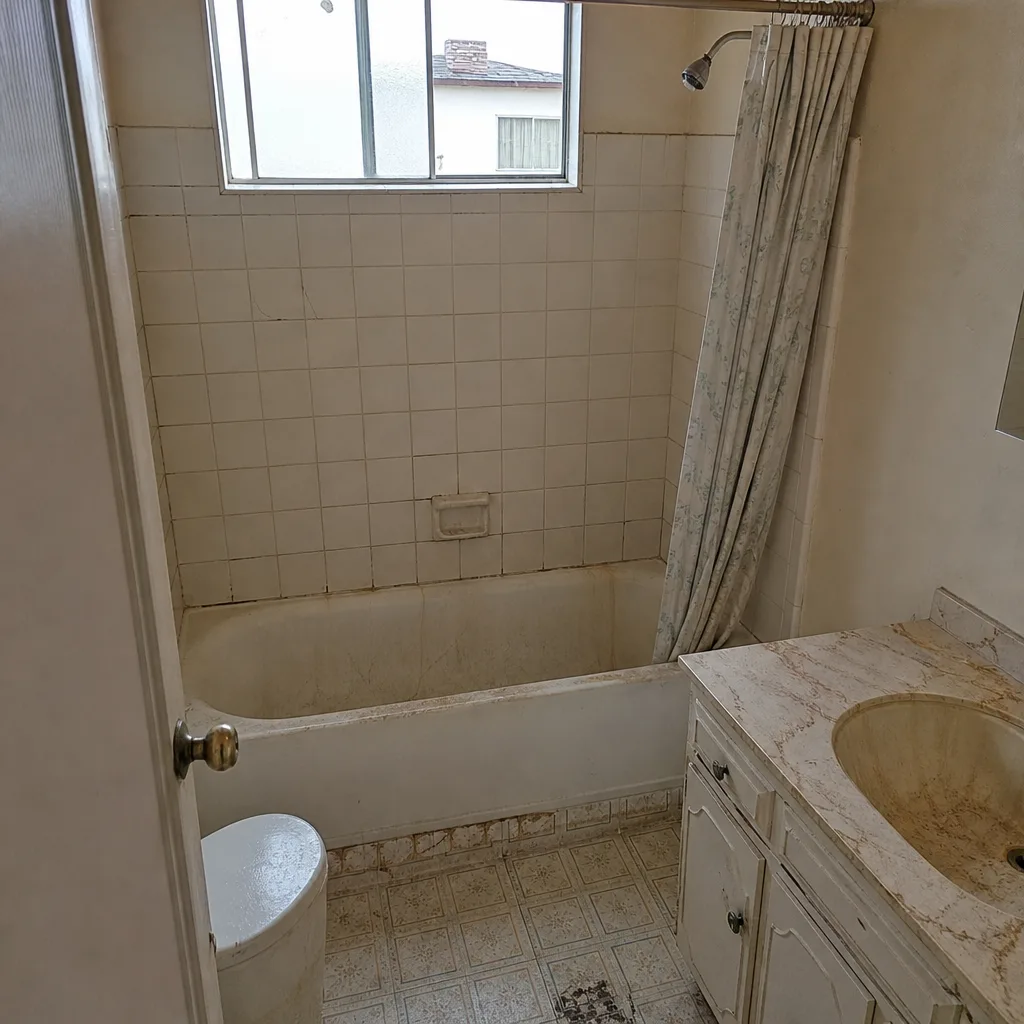
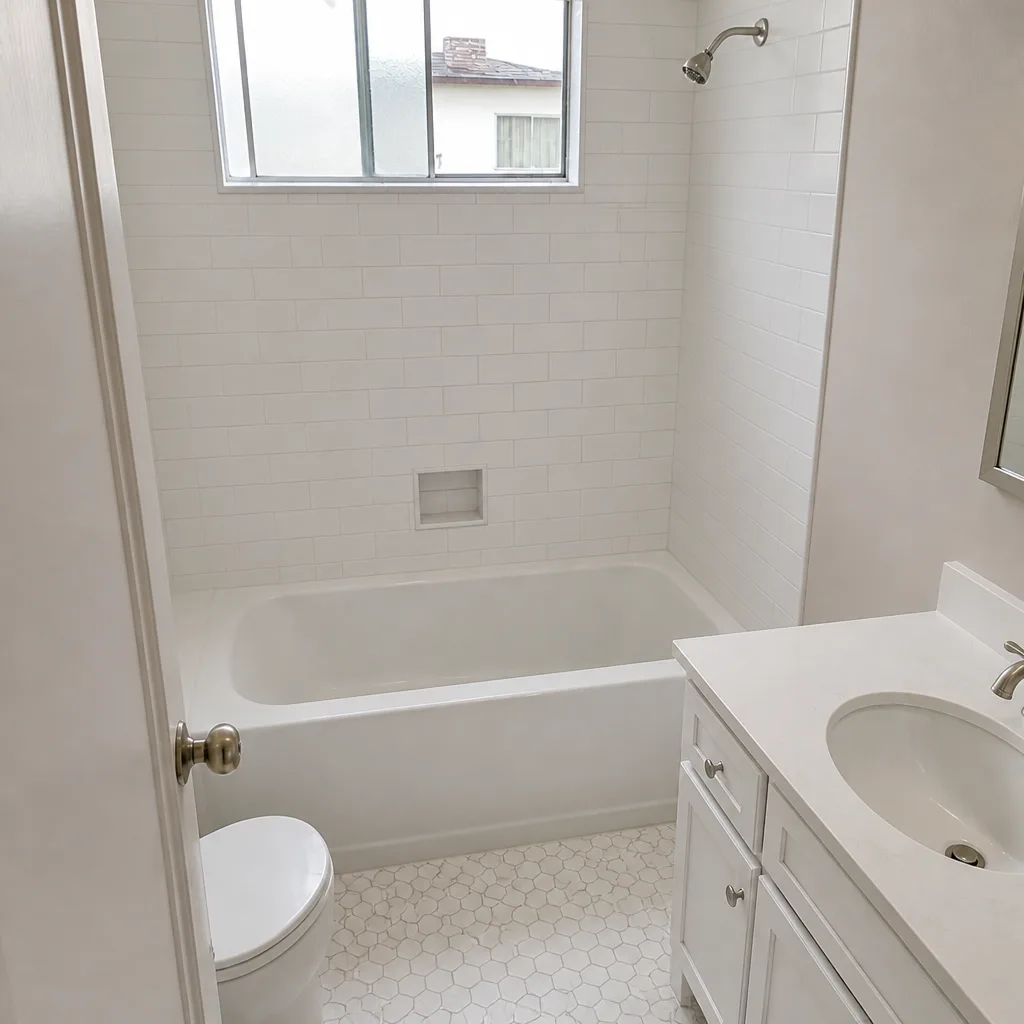
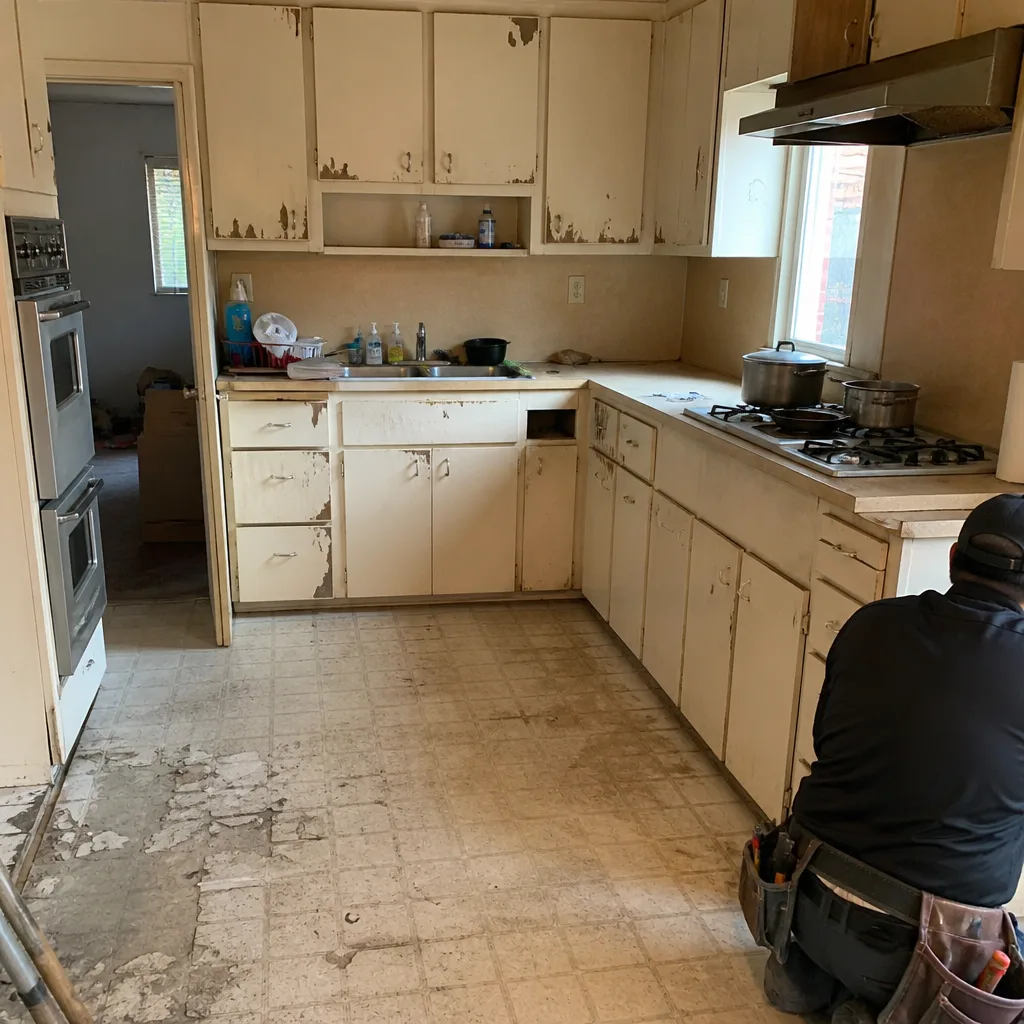
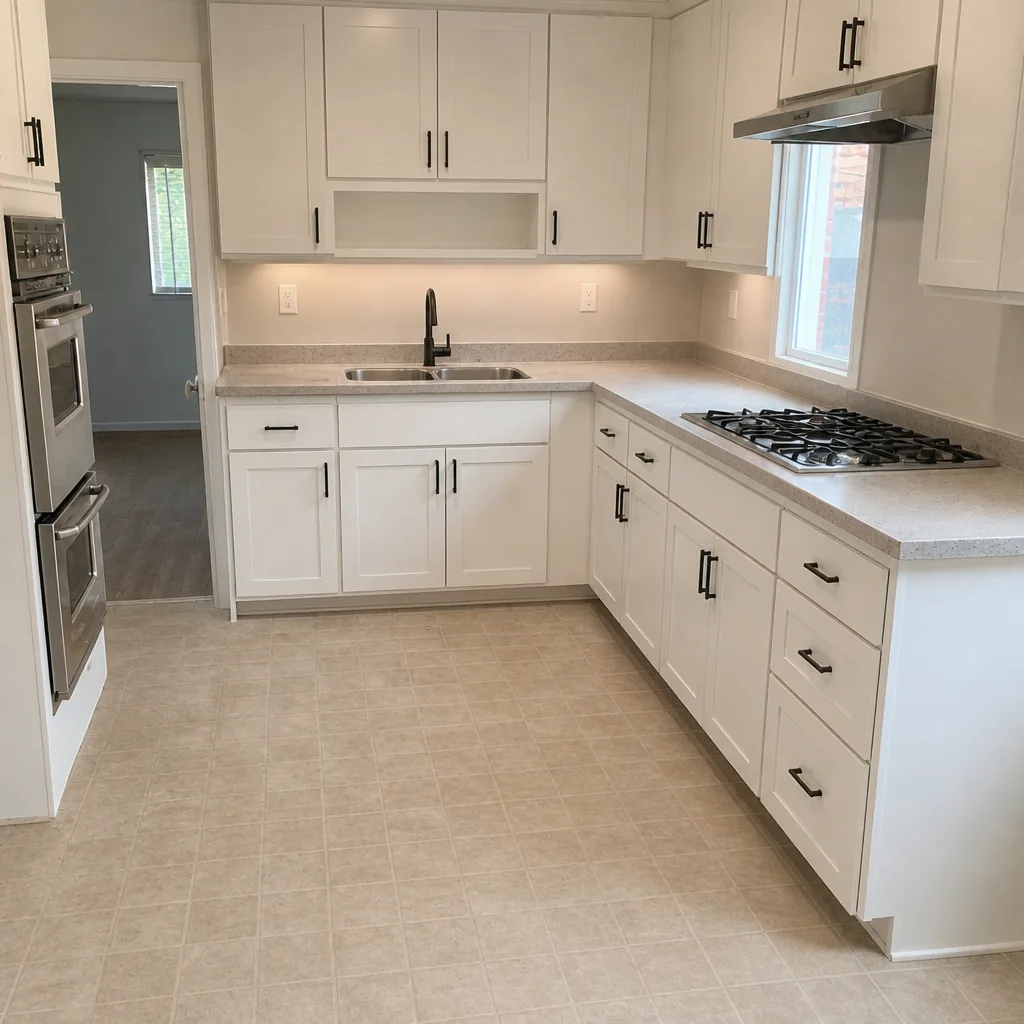
See the difference
 Before
 After
 Before
 After
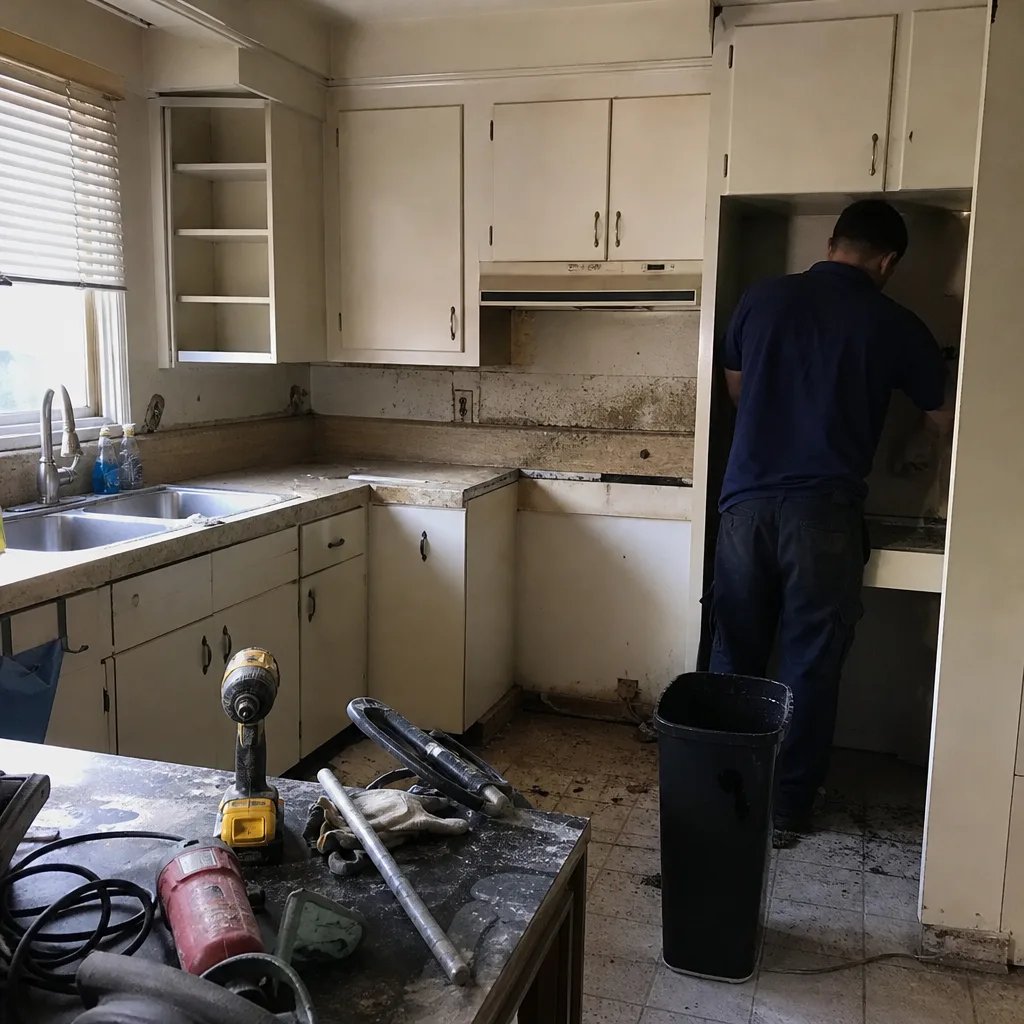 Before
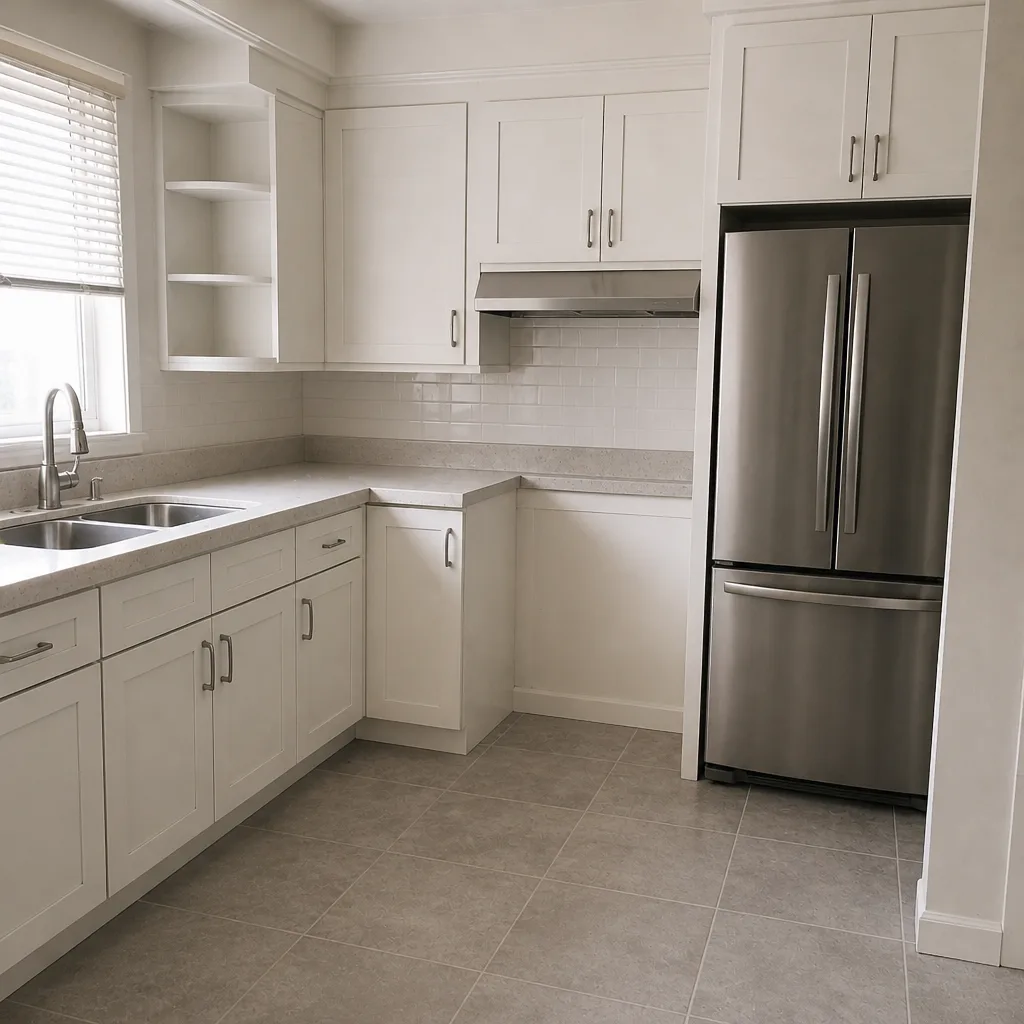 After
When to Call a Professional
Call a professional when the damage touches a load path, a connection to the foundation, a roof penetration, or anything electrical, and whenever water has entered the crawl space or against the wall base. Call when a fence or block wall has shifted rather than just lost a panel. Call when you’re not sure whether the roof leak is a shingle problem or a sheathing problem, because the answer changes the scope. And call before you start patching – a temporary cover to keep water out is fine, a homeowner repair that hides the actual damage is not. Construction Buena Park offers free estimates in Buena Park – call (833) 348-5952. Our technicians have up to 14 years of experience, we work with your insurer, and every job starts with a written, line-item estimate so the number you agree to is the number you pay.
Frequently Asked Questions

Photograph the damage from the ground before touching or moving anything, then contain any active water entry, and only then call your insurer and a contractor. Don’t climb on the roof to inspect it yourself – wind events often loosen fascia and sheathing anchors in ways that aren’t visible from a ladder. Get the documentation first; the repair sequence follows it. Call (833) 348-5952 for a free estimate if you’re not sure whether the damage is cosmetic or structural.
Look at the sill plate along the foundation from inside the crawl space and check whether you see anchor bolts with nuts and washers at regular spacing, or just diagonal nails. If you can’t tell, don’t cut into anything – have a contractor look. Most homes built in Buena Park before 1980 were framed with a lighter sill connection than today’s requirements call for, and a visual check from the crawl space settles the question in minutes. Call (833) 348-5952 to schedule an assessment.
A tall unreinforced masonry wall is the most likely structure on your property to topple in ground shaking, and a visible lean, stepped diagonal cracks, or movement at the column bases all point to reinforcement problems. Photograph it now, while it’s standing, so there’s a record of its pre-event condition. Call (833) 348-5952 for an estimate on reinforcement or replacement.
Flash flooding on this side of Buena Park follows low ground, so the answer depends on whether your garage slab sits below the driveway grade and how the driveway pitches. Water pools at the threshold joint first. If your driveway has settled and now slopes toward the door, that’s a drainage problem worth fixing before the rainy season. Call (833) 348-5952 for a free assessment of the driveway and threshold drainage.
AB 2765 caps price increases on goods and services needed after a declared state of emergency, which covers repair work and building materials. The protection depends on documentation, so keep a written line-item estimate, dated quotes, and photographs. The written estimate sets the price. Call (833) 348-5952 – estimates are free and written.
We answer 24/7, and we book an on-site assessment with dispatch running 7am to 7pm, Sunday through Friday – we’re closed Saturday. A call outside dispatch hours is booked into the next opening. The estimate itself is written and priced per job once we’ve seen the damage. Call (833) 348-5952.
The Bottom Line
Emergency preparedness for a Buena Park home is mostly a documentation exercise and a short list of known weak points. Mudsills, masonry fences, and vent penetrations are the three structural failures that actually matter in this housing stock, and each one can be checked before an event rather than after. Photograph everything, keep permits and material records in one cloud folder, and know your drainage. When a repair crosses from cosmetic to structural, get it looked at by a professional, get a written scope, and don’t let anyone start work without one. The property-wide scope matters too – one team handling the home additions & ADU work, the roof, and the drainage means the accountability doesn’t fragment after an event.
If a Buena Park storm has already left you with damage, or you want a pre-season walk of your property, Construction Buena Park is ready. One contractor from the driveway to the roofline, 50-plus brand partnerships across all seven service lines, and free written estimates on every job. Call (833) 348-5952. We answer 24/7. Fast dispatch from 7am to 7pm, Sunday through Friday.
Written by the team at Construction Buena Park.