Last updated November 17, 2026



Free written scope consultation - allowances, timeline, and change-order rules on paper before a single trade is scheduled
Driveway & Pavers Maintenance Checklist for Buena Park Homeowners
Most driveway failures we see in Buena Park are not the fault of the concrete or the pavers. They are the fault of products and schedules borrowed from colder or wetter parts of the country. A concrete sealer formulated for heavy rain and cold winters can start to fail within roughly eighteen months under our ultraviolet intensity, and once a failing film is on the surface, the sun works on it faster than the weather ever did. Using the wrong product on schedule doesn’t maintain your driveway; it accelerates its failure. This guide walks through the specific deterioration pattern most Orange County driveways follow and gives you a maintenance checklist built around our climate, our common street trees, and the paver systems actually installed here.
Quick Answer
A proper maintenance routine in Buena Park is four seasonal checks a year – after Santa Ana winds, after the rainy season, at peak summer heat, and during the fall leaf drop – plus a UV-stable penetrating sealer every three to five years on concrete and polymeric sand replenishment on pavers whenever joints wash out. Wash pavers at moderate pressure (never high enough to strip joint sand or dull the finish), inspect for tree root heave twice a year, and address joint sand washout early, since it is the leading cause of paver shifting in Orange County. Most driveways here need a professional assessment every three to five years, not constant work.
Styles & brands we work with
- Kitchen remodeling
- Bathroom remodeling
- Home additions & ADU
- Roofing
- Windows & doors
- Driveway & pavers
- Fence
Table of Contents
- Why Buena Park Driveways Fail Differently Than Anywhere Else
- Which Sealers Hold Up Under Southern California UV
- How to Spot Paver Joint Sand Washout Before Pavers Shift
- The Four-Season Checklist for Buena Park
- Tree Root Intrusion: Early Warning Signs and When Patching Is Futile
- The Right Pressure-Wash PSI for Pavers, Concrete, and Exposed Aggregate
- Repair or Replace? A Simple Decision Framework
- What a Maintenance Budget Looks Like Over Time
Why Buena Park Driveways Fail Differently Than Anywhere Else
Buena Park sits inland enough to catch real temperature swings between day and night, and sunny enough in summer that surfaces bake for hours. That combination sets up a two-part stress pattern that most national maintenance advice never addresses: intense ultraviolet exposure on the surface, and small cycles of expansion and contraction underneath that open hairline cracks and loosen joints over time.
Why this matters for the products you choose:
- UV is the primary enemy of the finish. Pigments fade, acrylic films turn chalky and yellow, and sealers that aren’t UV-stable lose their protective layer long before they look visibly worn.
- Temperature movement is the primary enemy of the structure. Concrete slabs expand and contract, pavers shift slightly against their bedding sand, and joints do the flexing work. When joints are empty, that flexing becomes movement.
- Rain is infrequent but can arrive hard. The rainy season doesn’t deliver steady drizzle; it delivers concentrated storms that test drainage. Water that ponds against an edge or sits in a joint finds the weak spot.
Because Buena Park driveways aren’t under constant freeze pressure the way mountain and inland-desert driveways sometimes are here, structural failure is usually slow and cosmetic first. That’s good news: it means a maintenance checklist, followed honestly, can add years to a driveway. The catch is that cosmetic failure hides structural weakness until it’s too late. Catching it in the cosmetic phase is the whole game. In our experience, the homeowners who ask for an inspection before they see a problem spend less than the ones who wait for a settled slab or a shifting paver field to call.
Buena Park’s housing mix makes this matter more than in many neighboring cities. Older driveway aprons and single-slab concrete driveways around the city’s established neighborhoods were often poured decades ago, while newer paver driveways use modern interlocking systems with engineered base layers. Those two constructions require completely different maintenance plans. A sealer-and-joint schedule that suits a newer paver driveway will do nothing useful for a tired original slab, and vice versa. Knowing which one you have is the first step.
Which Sealers Hold Up Under Southern California UV
If you buy only one thing for your driveway this year, buy the right sealer. Concrete and exposed aggregate driveways in Buena Park need a penetrating, UV-stable product, while unsealed concrete needs nothing at all until surface dusting or staining begins. The sealer category, not the brand name, decides whether it survives two summers or starts failing.
Penetrating Silane-Siloxane Sealers
These soak into the concrete and react with the surface rather than sitting on top of it. There’s no film to peel, chalk, or yellow, which makes them the more forgiving choice for a sunny, occasionally cool-inland climate. The tradeoff is that penetrating sealers protect against water and staining but won’t give you a glossy “wet look.” Reapplication is typically every three to five years depending on exposure and traffic.
Acrylic Topcoat Sealers
Acrylics sit on the surface as a film and can deliver a rich finish and easy cleaning on the right substrate. But a poor-quality acrylic in a high-UV environment is exactly the failure pattern mentioned at the top: it can start to crack and yellow within roughly two summers and become a maintenance problem in its own right. If you want a film-forming finish, choose a UV-stabilized acrylic rated for high-sun exposure, and don’t apply it over a damp or dirty surface.
What to Look For on the Label
- Look for “UV-stable” or “UV-resistant” language, then check the technical data sheet, not just the front of the can.
- Confirm whether the product is penetrating or film-forming – don’t mix the two in one maintenance program.
- Match the product to your substrate: concrete, exposed aggregate, and pavers each have a correct sealer class.
- Check the manufacturer’s re-application interval, then shorten it slightly for full-sun driveways.
- Ask whether the product voids or preserves any warranty on your paver or concrete system.
Because the wrong sealer creates a bigger maintenance job than it prevents, this is one place where a short professional inspection before you buy the bucket is worth the time. When hardscape work needs more than maintenance, our driveway & pavers team can assess the surface, the base, and the warranty situation before recommending a product.
How to Spot Paver Joint Sand Washout Before Pavers Shift
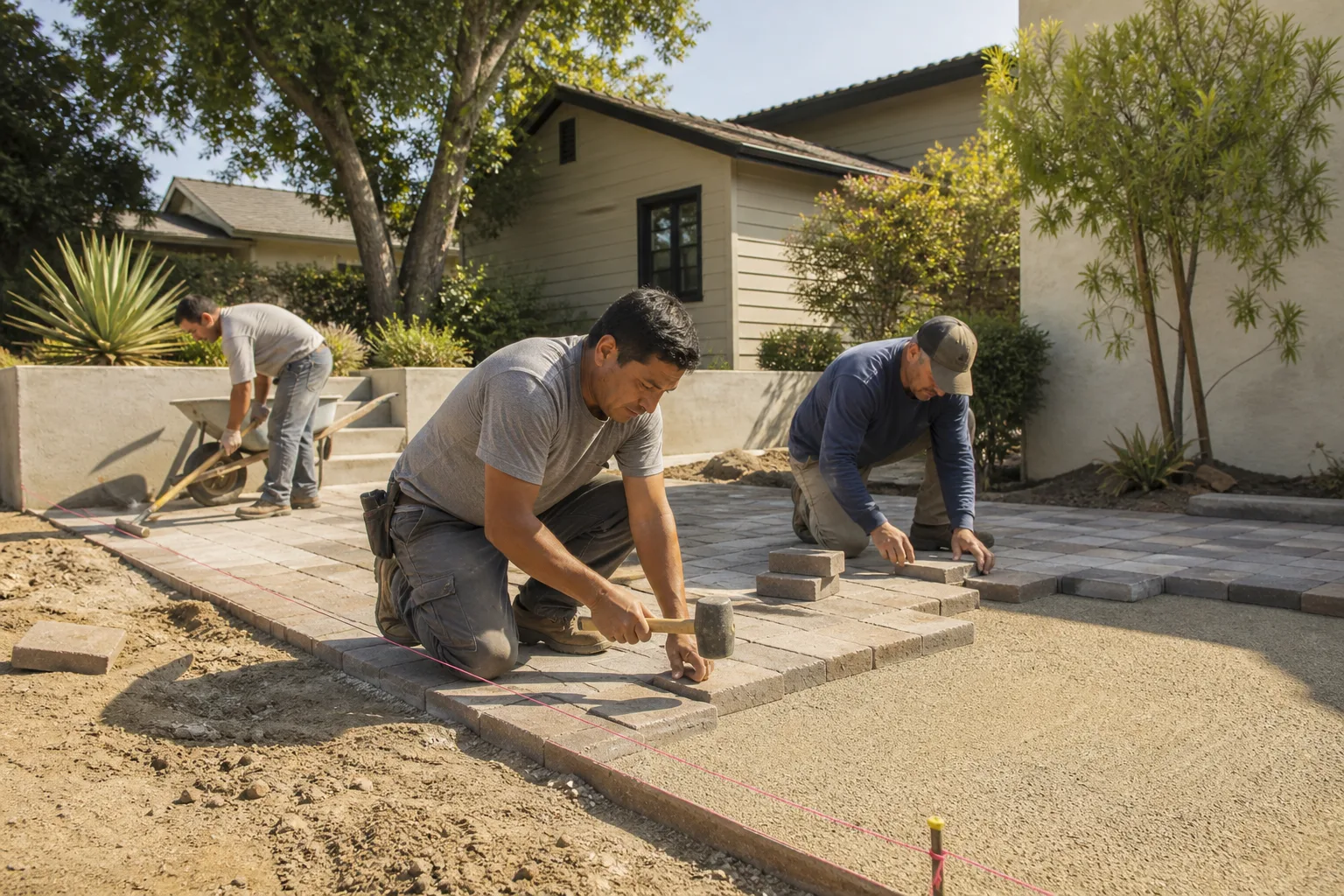
Paver joint sand washout is the leading cause of paver shifting in Orange County, and it usually announces itself long before a single paver moves. The joints between pavers are what hold the whole field together: they keep the pavers from rubbing against each other, they help shed water, and they absorb the small movements the whole system makes. When the sand drops out, the pavers start to interlock with nothing, and every load and every temperature cycle loosens them a little more.
Early Warning Signs
- Visible gaps or joints that look deeper than they did a year ago.
- Weeds or grass sprouting from joints – an indicator that the sand level has dropped and created a seedbed.
- Water pooling in specific joints after a storm, or water draining through the joints instead of running off.
- A slight “loose” or hollow feel underfoot when you walk the field.
- Small settling at edges or near the garage apron, where water and traffic concentrate.
The Right Sand for the Repair
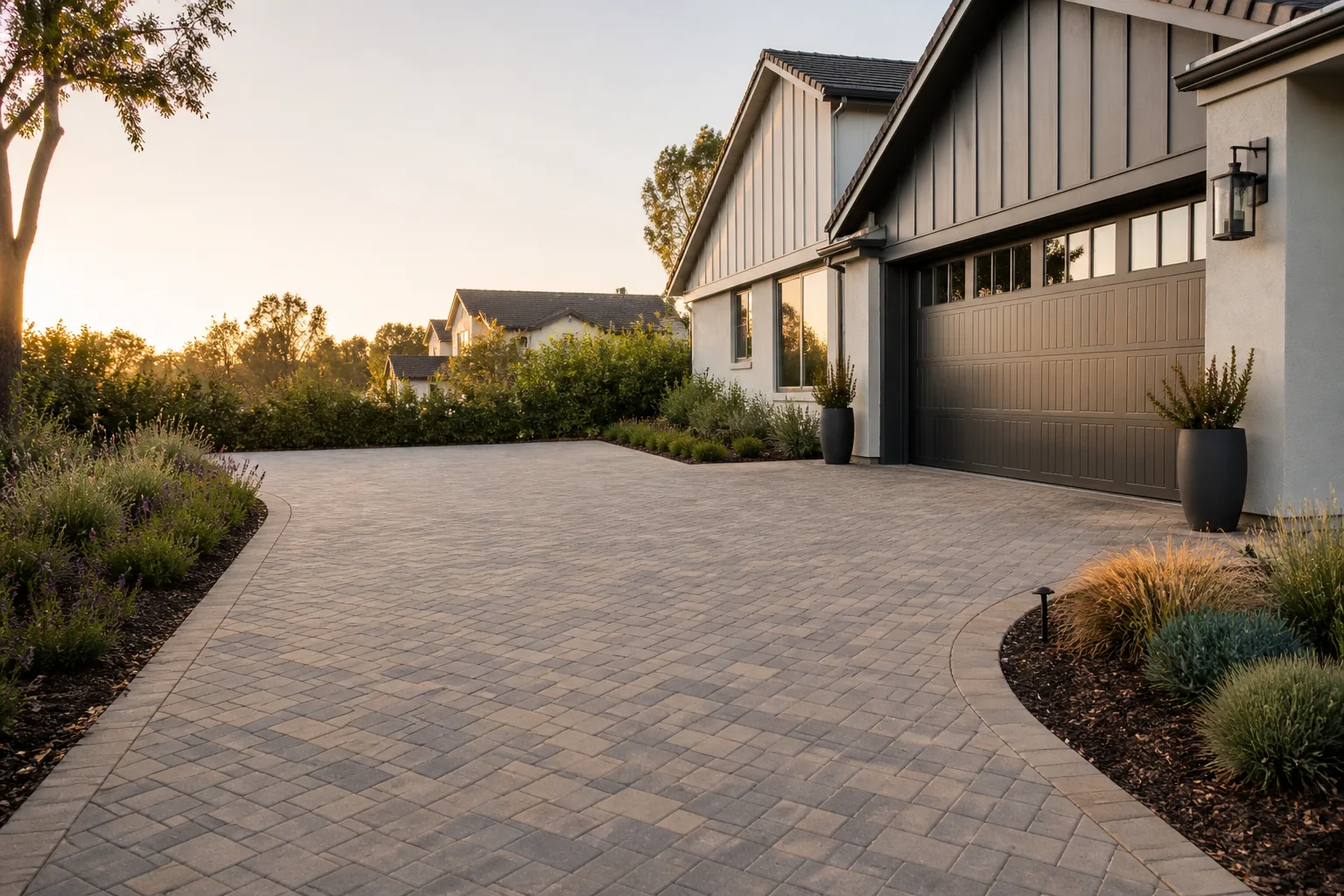
The fix is a joint refill with a proper polymeric sand, applied correctly. Polymeric sand binds with moisture to lock joints and resist washout, which is why it’s the standard repair material for both new installs and refills. Techniseal and Alliance Gator are two of the paver-joint brands we work with, both with documented application guides and clear instructions on wetting and curing. Use the product’s own instructions – typically a light wetting after filling, without over-wetting – because over-saturating a polymeric joint can wash out the binder before it sets. The product lines you choose should match the paver system you have; Belgard, Unilock, and Techo-Bloc all publish joint-sand guidance, and Tremron is another trusted paver system for standard residential work.
How to Do a Joint Check
- Walk the whole field and note joints that look deeper, wider, or empty.
- Pull a finger across a suspect joint to feel for resistance; empty joints feel noticeably loose.
- Check edges and the transition to the street and garage first – these reveal washout earliest.
- Look for a pattern of settling along one line, rather than isolated joints, which points to a base issue.
- Compare the field to a small hidden section (behind a gate, at a planter) that hasn’t seen traffic.
If the pattern is widespread and pavers have sunk or tilted, the base layer, not just the joint sand, needs attention. That’s the point to stop patching and get an assessment.
The Four-Season Checklist for Buena Park
Buena Park’s weather divides neatly into four maintenance windows, each tied to one seasonal event: Santa Ana winds, the rainy season, the peak summer heat, and the fall leaf drop. Doing the right check in the right window catches problems when they’re small and cheap.
1. After Santa Ana Winds (Late Fall into Winter)
- Clear windblown leaves, branches, and dust from the driveway, especially at drainage points.
- Inspect for new cracks or lifted edges where debris or branches have struck the surface.
- Check that drain inlets and channels aren’t clogged by wind-driven material.
- Look closely at paver edges, where wind-driven grit can loosen the restraint.
2. After the Rainy Season (Late Winter into Spring)
- Walk the field after the first big storm to see where water pools or runs rather than sheds.
- Note any joint that washed out, and plan a polymeric sand refill before summer traffic.
- Inspect concrete for new hairline cracks, and mark them to track whether they grow.
- Check the base and edges for settlement from saturation.
3. Peak Summer Heat (June through September)
- Review your sealer’s UV rating and re-apply if it’s at the end of its interval; don’t let a failing film sit all summer.
- Watch for fading, yellowing, or chalking on any filmed surface.
- Check for new cracks or loose pavers after the hottest weeks, since temperature movement is greatest here.
4. Fall Leaf Drop and Debris Period
- Keep leaves clear of joints and drains; organic debris retains moisture against the surface.
- Inspect joints for weed growth and refill any that are starting to lose sand.
- Do a full walk-through and record what you see for the spring rainy-season check.
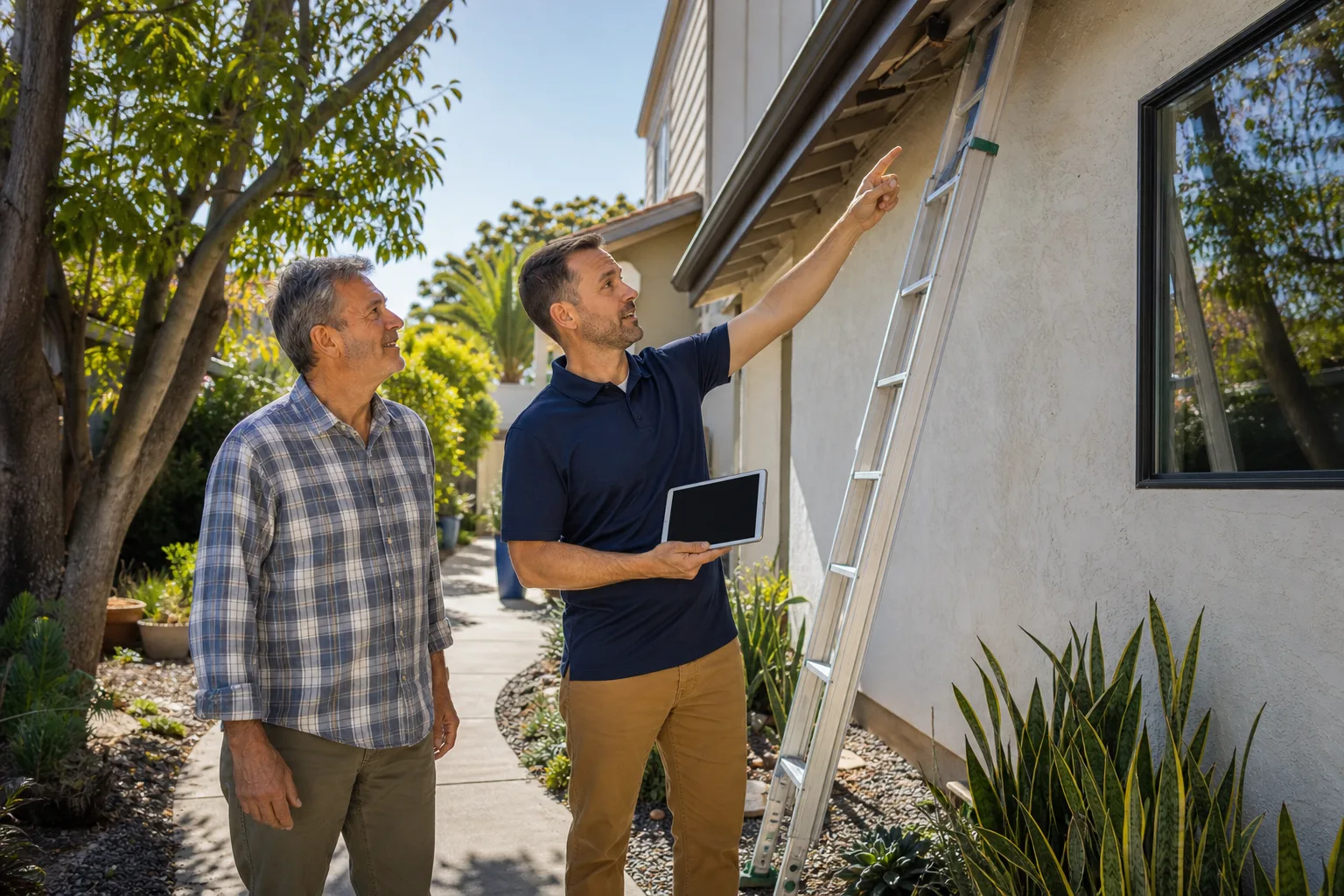
You don’t need to do all of this yourself. A single annual inspection that catches the summer sealer cooling and the fall joint washout can be done in one visit by a professional, and it gives you a written record of what’s failing and what’s still sound. If your project grows beyond maintenance into a replacement or a larger exterior plan, one contractor spanning the whole exterior – including fence installation, exterior cladding, and the driveway at the same time – saves you the scheduling shuffle. Pairing hardscape and exterior refresh in one contract is one of the more cost-effective ways to improve a property, and it keeps a single point of accountability across the whole job.
Tree Root Intrusion: Early Warning Signs and When Patching Is Futile
Buena Park’s common street trees – ficus, jacaranda, and liquid amber – are the usual suspects in root-related driveway damage, and their root systems can lift pavers and crack slabs from below over time. Two of the three are aggressive rooters and the third grows large roots quickly, which means the root problem shows up earlier in Buena Park than in neighborhoods with shallower-rooted trees.
Early Warning Signs
- A ridge or “tent” forming in the driveway surface along a line that tracks toward the tree.
- Pavers that begin to rock or ride up in a straight line or arc.
- A crack in a concrete slab that widens over successive seasons.
- The driveway draining toward the tree side, or a line of joints opening in the same direction.
- A visible root at the surface where the driveway edge meets soil.
One important warning: don’t try to cut or remove a large structural root yourself. Removing the wrong root can destabilize a mature tree and create a safety problem for the tree and anything nearby, and in many of our cities root work near a tree is governed by local rules. That’s a job for an arborist or a specialist who can judge the tree’s condition.
When Patching Stops Working
A single paver lifted by a single root can sometimes be reset successfully. But when a whole line of pavers rides up, or a concrete crack reopens every year, patching the surface alone is money spent on the symptom. The root keeps pushing, and the patch fails. At that point you’re choosing between a long-term root and structural plan, or removing the tree. Homeowners often ask us whether this is worth doing in one project, and the answer is usually yes: it’s cheaper to plan a hardscape replacement around the tree’s actual footprint once than to keep patching every year. For more on larger property-scope planning, our home additions & ADU team handles projects that overlap the driveway, the rear yard, and the structure, and can flag root issues early in the design phase.
The Right Pressure-Wash PSI for Pavers, Concrete, and Exposed Aggregate
Pressure washing is the most commonly overdone maintenance task we see. Done at the right pressure, it resets a surface clean without harm. Done too hard, it strips joint sand, dulls the finish, opens the pores of concrete, and can void most manufacturer warranties. Here are practical PSI targets for the three common Buena Park surfaces:
- Pavers: generally moderate pressure – around 1,000 to 1,500 PSI – with a wide fan tip, held at an angle. At the upper end, take care not to blow joint sand out; loose joint sand should be replenished after cleaning.
- Concrete: typically 1,500 to 2,500 PSI, using a rotating surface cleaner to keep the pressure even, and never holding the wand in one spot long enough to etch the surface.
- Exposed Aggregate: the gentlest of the three – usually under about 1,500 PSI, angled so the spray lifts dirt out of the textured surface without digging out the aggregate. High pressure here is the fastest way to turn a nice exposed-aggregate driveway into a pitted, patchy one.
Two rules apply to all three surfaces. First, a narrow, focused nozzle aimed at a joint or edge concentrates pressure in a way a wide fan tip does not; use wide tips and keep moving. Second, always check the manufacturer’s warranty for a pressure maximum – most published paver and concrete systems state one, and a failed surface that shows pressure marks can be a warranty problem for years to come.
After you clean, the right follow-up for pavers is a joint-sand check and a polymeric refill where undercutting occurred, and for concrete and exposed aggregate a check of whether the sealer has been compromised. In our experience, a professional clean is usually cheaper than the extra sealer and joint repair needed when a homeowner handles it at too high a pressure.
Repair or Replace? A Simple Decision Framework
Every driveway eventually forces the question. Use this decision framework in Buena Park to see whether a repair will hold:
- Single joint or paver: repair. A lifted paver, a single cracked brick, or one washed-out joint is a routine fix.
- Widespread but local pattern: repair if the base still feels solid. Test by walking the field, looking for a hollow feel or a rocking edge.
- Repeated repairs in the same spot: investigate the base. Repeated surface fixes are a sign the problem is below.
- Concrete with multiple cracks that continue to widen: plan for replacement rather than patching.
- Heaved slabs or a settled field across a line: replace the affected section or plan a full resurface.
- Root intrusion that’s moved a line of pavers: address the root first, then decide.
The rule of thumb most experienced contractors use: if you’re repairing the same section three times, you’re replacing the base anyway. That’s the moment to weigh a full resurface. It’s also when a homeowner can upgrade from a basic paver to a premium system without re-doing the whole project twice – Cambridge pavers, for example, sit at the premium end of residential design, while entry-level Quikrete and Sakrete products meet budget-conscious needs. The finish you pick at the replacement stage is part of the cost decision, so choose before you commit to the scope, not after.
For a broader look at whole-property scope and what a single contractor can carry across an exterior project, see our Construction Buena Park overview.
What a Maintenance Budget Looks Like Over Time
It’s hard to give accurate prices without seeing a driveway, so treat these as general expectations, not quotes, and the written estimate controls the price on any job we do. In broad terms, planned maintenance in Buena Park usually breaks into four spending bands:
- Annual check and joint inspection: a low-cost, high-value item that catches what the eye misses. Doing this keeps a small issue from becoming a replacement.
- Sealer re-application: on a three-to-five-year cycle for concrete and exposed aggregate, with the interval set by exposure and the product’s own rating.
- Polymeric sand refill: done when joints wash out, usually after the rainy season, and cheaper per square foot than any base repair.
- Section replacement or base repair: the larger ticket, incurred only when root intrusion, repeated settling, or a failed section forces it.
The reason to budget for planned maintenance rather than reactive repair is that the maintenance side is usually cheaper than the repair side by a wide margin. A sealer re-application on a working surface protects what’s there. A premature replacement never does. The same logic applies across an exterior: putting off a paver joint refill can accelerate the day you replace the driveway, and choosing the wrong exterior product, like an unpainted James Hardie panel installed without UV consideration, creates a refresh job later. When a project grows into something bigger, our exterior team can help you plan spending across several years instead of in one hit.
Common Mistakes to Avoid
- Buying a sealer rated for rainy climates. A product that’s ideal for heavy-rain regions can fail within about eighteen months under Buena Park’s UV. Check the UV rating before you buy, not the regional marketing copy.
- Pressure-washing pavers too hard. Blowing joint sand out “cleans” the surface and loosens the field at the same time. Keep pavers moderate and wide-tipped, and avoid the high settings most consumer units reach.
- Skipping the joint sand check after rain. Washout is easiest to fix right after the rainy season and hardest once pavers have already moved. Do it early.
- Patching a root-driven problem. Patching a lifted line of pavers without addressing the tree root means paying for the same repair next season.
- Mixing sealer types. Layering a film-forming acrylic over a penetrating sealer, or vice versa, creates poor adhesion and a failing finish. Match the product to the maintenance program.
- Washing exposed aggregate at concrete pressure. Exposed aggregate needs the gentlest setting of all three surfaces; a high-pressure pass can pit the finish permanently.
- Doing the fall cleanup without inspecting joints. The fall debris check is exactly when joint issues are most visible, so don’t just rake and go. Use it as an inspection window.
See the difference
 Before
 After
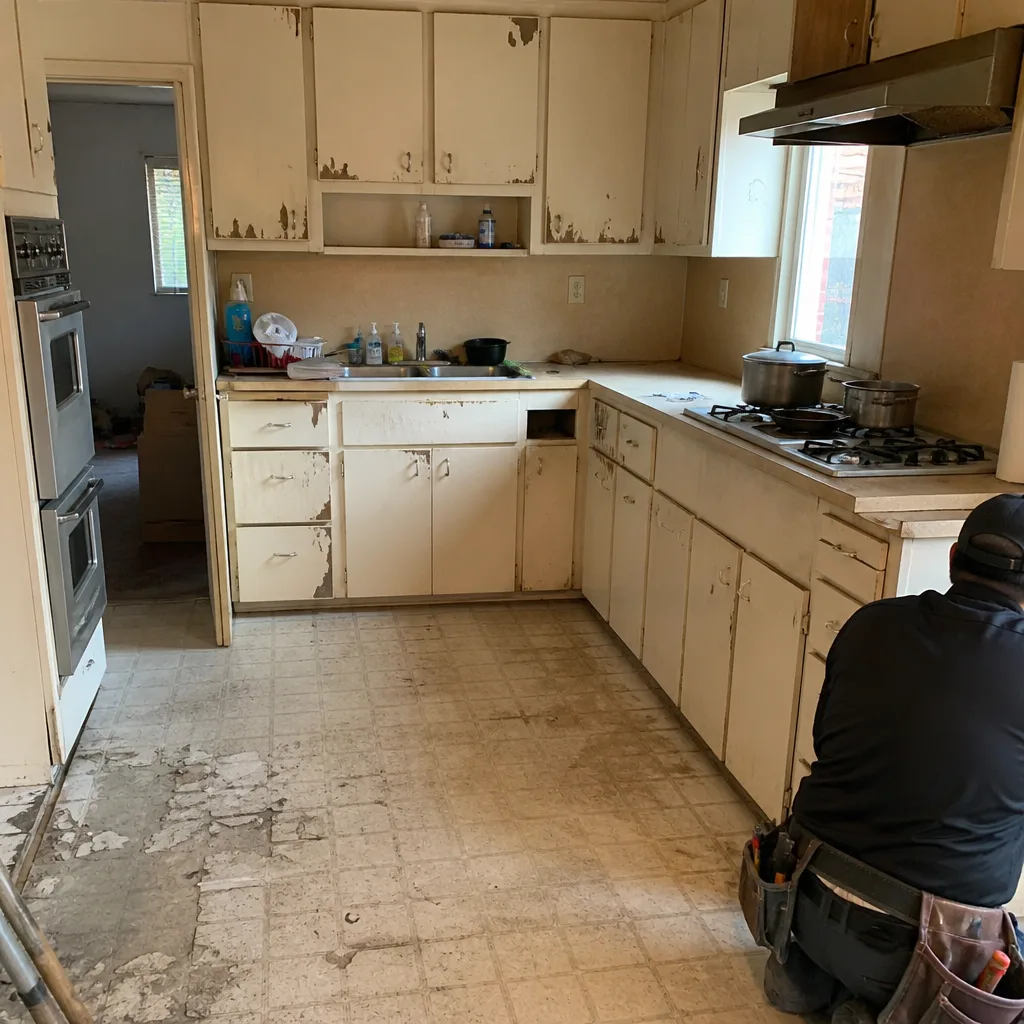 Before
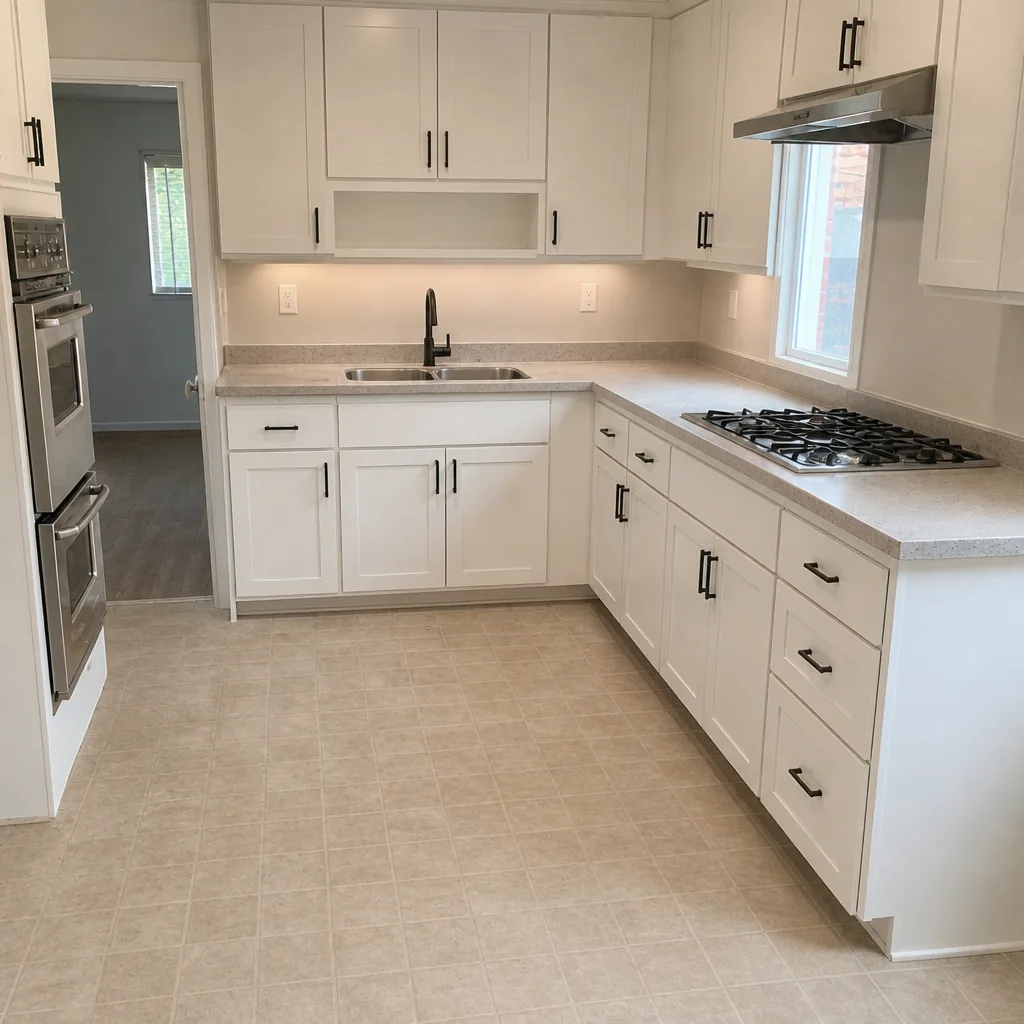 After
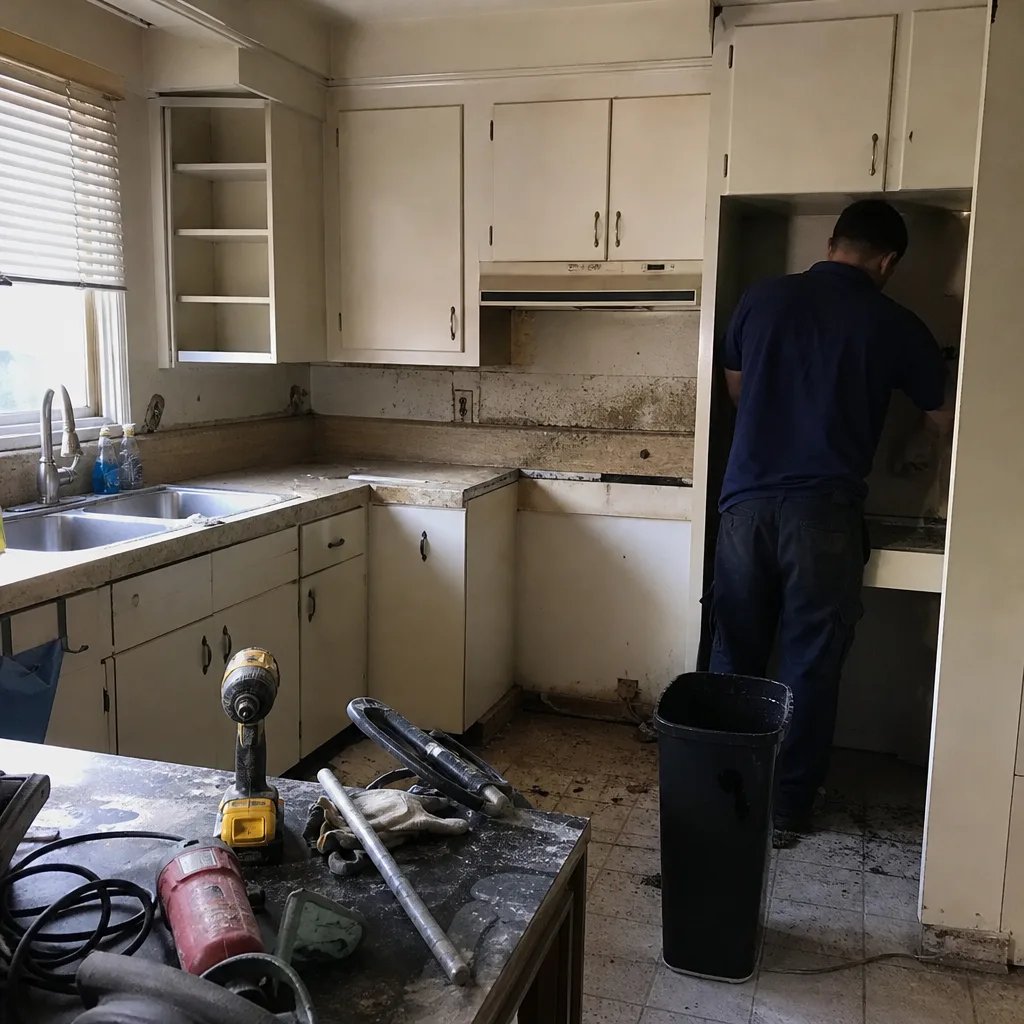 Before
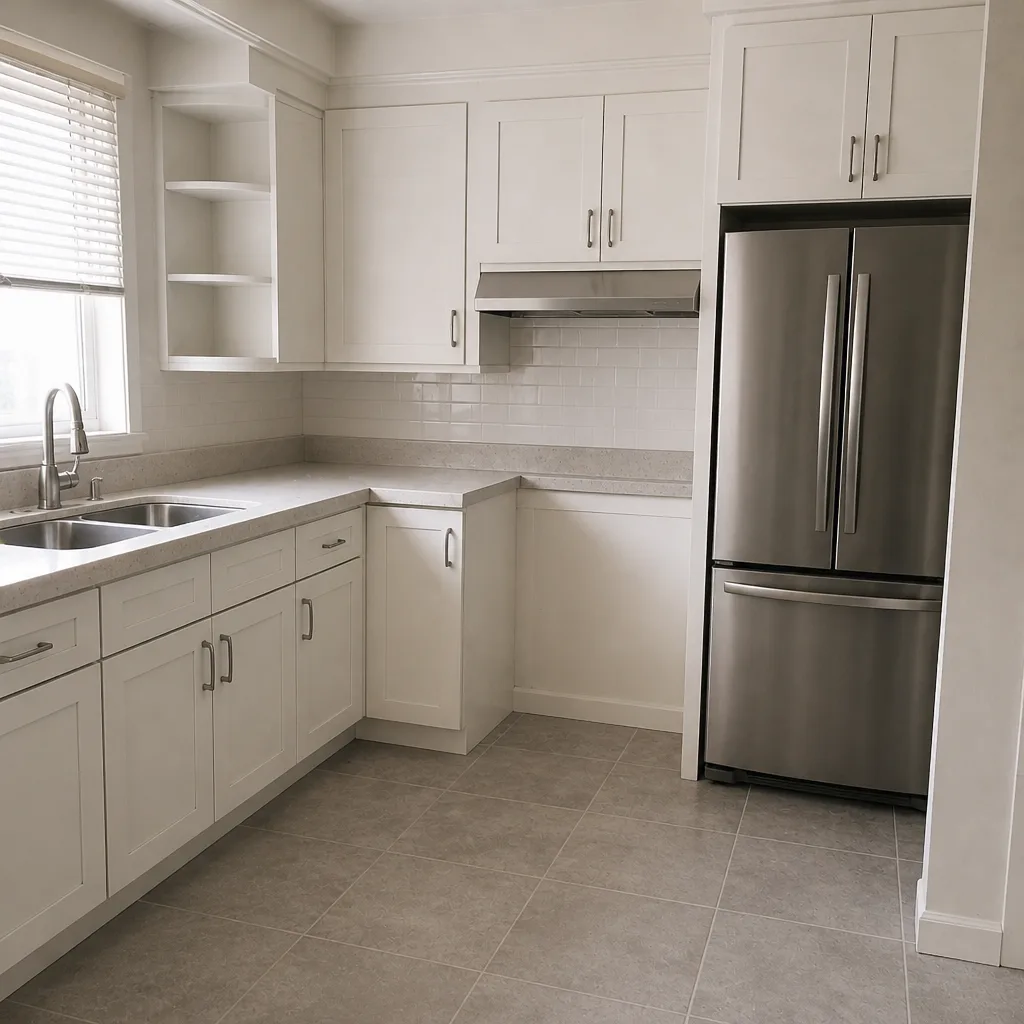 After
When to Call a Professional
Some maintenance tasks are safe to handle yourself: clearing debris, checking joints, and doing a seasonal walk-through. Others carry a real risk of making the problem bigger – pressure washing at unsafe pressure, re-sealing a substrate that isn’t ready, or digging into a root problem that could destabilize a tree. Call a professional when you see pavers moving in a line, a concrete crack that reopens every year, a joint field that won’t hold sand, or when you simply want an honest assessment of whether the driveway has years left or needs a plan. Buena Park homeowners can call (833) 348-5952 for a free estimate on any driveway and paver work, and we’ll tell you what’s actually failing and what still has life in it.
Construction Buena Park offers free estimates across the whole property, from a single joint repair to a full paver redesign. Our technicians have up to 14 years of experience, and we work with manufacturer systems that carry documented warranties and clear installation requirements.
Frequently Asked Questions
Every three to five years for a penetrating sealer, and more often if the driveway sees full sun and heavy traffic. Because UV is harsh here, choose a UV-stable product and follow its own re-application interval rather than a generic schedule. If a film-forming sealer is already on the surface, don’t top it off with a penetrating product; match the new coat to what’s there. Call (833) 348-5952 for an assessment of what your surface actually needs – estimates are free.
Look for joints that are deeper or wider than they were a year ago, weeds sprouting from the joints, and water pooling in individual joints after a storm. Any of these means the joint sand has dropped and the field is starting to lose its interlock. The fix is a polymeric sand refill with a proven product such as Techniseal or Alliance Gator, applied to the manufacturer’s wetting instructions. If pavers have already tilted or ridden up, the issue is bigger than sand – call (833) 348-5952 to have it checked.
Generally moderate pressure in the range of about 1,000 to 1,500 PSI, with a wide fan tip and a steady, moving spray. Going too high strips joint sand and can dull the finish, and most paver manufacturers publish a pressure maximum that a careless pass can void. Exposed aggregate needs even less – usually under about 1,500 PSI. Call (833) 348-5952 if you’d rather have a professional clean done to spec.
Yes. Ficus, jacaranda, and liquid amber are among Buena Park’s more root-active street trees, and their roots can lift pavers and crack slabs over time. The early sign is a ridge or a line of pavers riding up toward the tree. Don’t cut a structural root yourself, since that can destabilize the tree. Get an arborist or professional assessment and plan the repair around the root’s real footprint. Call (833) 348-5952 for a driveway assessment in Buena Park – estimates are free.
Most likely it wasn’t UV-stable or it was the wrong class of product for the surface. An acrylic film rated for a cooler, wetter climate can turn chalky or yellow within about two summers under Buena Park’s ultraviolet exposure. The fix is to strip the failing film correctly, prepare the surface, and apply a UV-stable product that matches the substrate. Call (833) 348-5952 to have the surface evaluated before you buy another bucket.
Repair is usually cheaper until you’re repairing the same section three times – at that point you’re replacing the base anyway. Past that, a full resurface is often the better value, especially if you’re moving up to a premium paver system at the same time. The written estimate sets the final price on any job we do. Call (833) 348-5952 for a free estimate on both repair and replacement options in Buena Park.
The Bottom Line
The maintenance plan that works in Buena Park is the one built around our UV and our temperature swings, not one copied from a colder region. Check the driveway four times a year – after Santa Ana winds, after the rainy season, at peak summer heat, and through the fall leaf drop. Choose a UV-stable penetrating sealer for concrete and exposed aggregate, refill joints with a proper polymeric sand as soon as they wash out, and address tree root intrusion early rather than patching over it. Wash pavers moderate and exposed aggregate gently. Handle the seasonal checks yourself if you’re comfortable, and call a professional before problems are structural. Planned maintenance is the cheapest line item in the driveway’s whole life.
One contractor from the driveway to the roofline means a single accountable partner for the paver refill, the exterior refresh, and the larger project that follows. Skip the sub-contractor shuffle and choose the brand and finish that fits your budget. Whether it’s a driveway and paver rebuild or a wider exterior plan, a single project relationship keeps the schedule and the quality under one roof.
Call (833) 348-5952 for a free estimate. We answer 24/7. Fast dispatch from 7am to 7pm, Sunday through Friday.
Written by the team at Construction Buena Park.