Last updated November 17, 2026






Free written scope consultation - allowances, timeline, and change-order rules on paper before a single trade is scheduled
How to Hire a Construction Contractor in Buena Park: A Step-by-Step Guide
Two contractors in Buena Park can bid the same kitchen remodel $18,000 apart and both be quoting honestly. That gap usually isn’t profit and it isn’t craftsmanship. It’s scope. One contractor priced a full gut with new framing, electrical, cabinets, and countertops; the other priced a cosmetic refresh that keeps the old plumbing rough-in and reuses the existing layout. The homeowner takes the lower number, then discovers the difference the day the walls come down, when the change orders start stacking up.
The usual advice, get three bids and read the reviews, doesn’t fix that. It optimizes for price when the real problem is comparing two documents that aren’t describing the same project. This guide walks through the order of operations that does work: write the scope first, verify the license and insurance, then compare bids line by line. You’ll also learn what to ask before you sign, which contract clauses actually protect you, and how a single accountable contractor compares to coordinating several specialty trades on a medium-to-large Buena Park project.
Quick Answer
To hire a construction contractor in Buena Park, write a detailed scope of work before you solicit any bids, verify every bidder’s CSLB license status, workers’ comp certificate, and city business license, then compare bids line by line against that scope rather than on the bottom-line total. A properly hired contractor has a verifiable license in the right class for your project, carries insurance, uses written change orders with thresholds, and won’t ask for a large cash deposit. The written estimate, not the phone quote, sets the final price.
Styles & brands we work with
- Kitchen remodeling
- Bathroom remodeling
- Home additions & ADU
- Roofing
- Windows & doors
- Driveway & pavers
- Fence
Table of Contents
- Write the Scope Before You Call Anyone
- C-License vs. B-License: Which You Actually Need
- How to Verify a Contractor in Under 10 Minutes
- How to Compare Bids That Are Actually Apples-to-Apples
- The Five Local Red Flags in a Boom-and-Bust Market
- Contract Clauses That Matter Most in Orange County
- What a Multi-Trade Contractor Changes About Your Timeline
- The Case for One Contractor From Driveway to Roofline
Write the Scope Before You Call Anyone
A scope of work is a plain-English document that tells every contractor exactly what you want built, replaced, or repaired. It’s the single most valuable hour you’ll spend on the project. Without one, three bids for the same kitchen come back describing three different kitchens, and you can’t tell which contractor is careful from which is cheap.
Your scope doesn’t need architectural drawings for a straightforward remodel, though a licensed designer’s plans help on anything touching structural walls. It does need to be specific enough that two contractors reading it would price the same list of tasks.
- Name the rooms and systems. “Kitchen and hall bathroom” is vague. “Kitchen full gut including cabinets, counters, plumbing fixtures, and lighting; hall bath tile surround, vanity, toilet, and exhaust fan” is a scope.
- List dimensions and existing conditions. Room sizes, ceiling height, whether walls are plaster or drywall, and what’s staying versus going.
- Specify materials or brand families. If you want quartz counters, name a few surfaces you’re considering; if you want a specific cabinet line, say so. Material choice drives a large share of the bid.
- State what’s explicitly excluded. Old appliances? A wall you don’t want moved? Leave-out items prevent optimistic bids.
- Ask for permits in writing. Say in the scope that the contractor pulls permits for anything that requires them.
- Put a timeline range on it. Even a rough sequence helps contractors price labor realistically.
A written scope is also the paper that protects you later. Every clause in your eventual contract should trace back to it. If a contractor later claims something “wasn’t included,” you can point to the document both of you priced.
C-License vs. B-License: Which You Actually Need
California licenses construction contractors through the Contractors State License Board (CSLB), and the license class matters enormously for multi-trade residential work. A B license (General Building Contractor) covers construction of a residential structure and the trades that are “incidental and supplemental” to that work. A C license is a specialty class, and each letter after C- identifies a specific trade.
The distinction matters when your project touches more than one trade. If you’re having a kitchen remodeled, a B-licensed general contractor can coordinate the electrician, plumber, and cabinet work. If you’re only having a fence installed, a specialty contractor with the right C license can do the job without a general contractor. Where buyers get burned is hiring a single-trade specialist for a multi-trade project and assuming they’ll handle everything.
- Single-trade replacement (a fence line, a driveway, a window package): usually handled well by the correct C-licensed specialty contractor.
- Multi-trade remodel (kitchen, bathroom, addition): a B-licensed general contractor is the right class.
- Mixed-property project (addition plus new pavers plus a new roof): a general contractor with a broad scope of trade relationships is who you want.
Ask any bidder for their license number and class in writing, then verify it yourself. The class on the CSLB record is the truth, not what’s printed on the door of a truck.
How to Verify a Contractor in Under 10 Minutes
You can confirm the three things that matter most in one sitting with the license number, insurance certificate, and city business license in front of you. Here’s the sequence.
- Check the CSLB record. Look up the license number on the CSLB site. Confirm the name matches the person or company bidding, the license is active (not expired or suspended), the class matches the work, and there are no disciplinary actions on file.
- Ask for a workers’ comp certificate. Any contractor with employees must carry workers’ compensation insurance in California. The certificate should name you as certificate holder for the project. If the contractor says they’re exempt as a sole proprietor, ask for that in writing.
- Ask for a general liability certificate. This is your protection if the crew damages your home or a neighbor’s property. Confirm coverage is active.
- Confirm the Buena Park business license. The City of Buena Park requires a business license to operate in the city. Ask for the license number; it takes minutes to verify.
- Cross-check the physical address and phone. A contractor with a real local presence has a traceable address and a business phone, not a cell phone that disappears after the project.
You’re not interrogating anyone; you’re doing what every careful homeowner on a five-figure project does. A straight contractor hands over all three items without hesitation and gets back to pricing. A contractor who stalls, says “I’ll send it later,” or asks you not to look it up is telling you something.
How to Compare Bids That Are Actually Apples-to-Apples
The right way to compare bids is line by line against your scope, not on the total. Sit down with two or three bids and use the scope as a checklist:
- Is every scope item priced? If a bid skips an item on your scope, add that cost back mentally. A “missing” item isn’t free; it’s a future change order.
- Does it include permits and inspections? A bid that quietly leaves permits out will surface them as an add-on later.
- What’s the material allowance, if any? If a bid uses a dollar allowance for cabinets or countertops rather than naming a brand line, you’re looking at a placeholder, not a price.
- Is demo and disposal included? Hauling, dumpster rental, and final cleaning are real line items. Some bids bury them, some omit them.
- Are labor and materials broken out? A split doesn’t change the total, but it tells you exactly what changes if you upgrade a material mid-project.
- What’s the finish-out and punch list? A bid that ends at “install cabinets” and doesn’t mention trim, paint, caulk, and cleanup is unfinished business.
When the bid is missing something on your scope, ask the contractor to add it before you compare. That converts every bid into the same list of work, which is the only fair comparison. Do that and the $18,000 gap usually collapses to a few thousand you can actually trace to a decision you get to make.
The Five Local Red Flags in a Boom-and-Bust Market
Southern California’s construction market swings hard, and when the pace picks up, shortcuts follow. These are the patterns worth recognizing before you sign:
- Unlicensed subcontractors. A licensed general contractor using unlicensed crew for the licensed trade work is a liability you inherit. Ask how the crew is vetted, and ask to see the sub’s license if the work is licensed-trade work.
- Refusing to sign a lien waiver. A contractor or supplier who won’t sign a conditional lien waiver after each payment is leaving you exposed to a mechanic’s lien on your home. Clear lien releases are routine for any organized contractor.
- Cash-only deposits. A large upfront cash payment, with no paper trail, is the red flag that most often comes back to bite homeowners. A small deposit for materials is reasonable; a demand for half the job in cash is not.
- Big deposits with no schedule. Any deposit should tie to a written payment schedule keyed to completed phases, not a lump sum front-loaded at signature.
- Verbal change orders. The moment work starts changing, every add should be a written change order with a number and a signature. A crew that wants to “sort it out later” is building a dispute.
These five aren’t just caution around strangers; they’re habits of disorganized contractors who are otherwise competent but financially stretched. Check for all of them before you commit, whatever the reviews say.
Contract Clauses That Matter Most in Orange County
Every construction contract should be read against a handful of clauses that make the difference between a smooth project and a six-month headache. These are the ones to slow down on:
Material substitution language
If a specified material is out of stock or backordered, what happens? A good clause requires written approval before substitution and names the process for choosing an alternate. It should also state that a substitution of lesser quality reduces the price, not just the timeline. On a cabinet line or a specified countertop surface, substitution language protects the finish you paid for.
Change-order thresholds
Set a dollar threshold above which any change must be written and signed before the work is done. Below a small threshold, allow the contractor to proceed with a written note. This keeps the project moving without letting scope creep run unrecorded.
Lien release timelines
Build in a conditional lien waiver tied to each payment, with a final unconditional waiver on the last payment. This is your protection against a subcontractor or supplier who didn’t get paid and files a lien on your property.
Payment schedule and retainage
Payments should be keyed to completed milestones, with a final payment held until the punch list is cleared. Clear in writing who is responsible for final inspections and sign-off.
Warranty and completion language
The contract should spell out what happens if a material fails or an installation is faulty, and within what window. Confirmed in writing, before signing, not promised at the walkthrough.
Read every one of these clauses aloud, and ask a question if any are missing. A contractor who answers them clearly is one who has done this many times. A contractor who dodges them isn’t ready for your project.
What a Multi-Trade Contractor Changes About Your Timeline
The biggest hidden cost on a large residential project isn’t labor or materials: it’s coordination. A kitchen-and-bath combo alone can involve cabinetry, countertops, plumbing fixtures, electrical, tile, drywall, paint, and flooring. Split that across four specialty contractors, and your project becomes a scheduling puzzle where every trade waits on the one before it.
What a multi-trade contractor provides is sequencing. Cabinets arrive after demolition and rough-in are complete; countertops are templated after cabinets are set; final plumbing and electrical connect after tile is down. Those dependencies exist either way, but when one contractor owns the schedule, a delay on one trade flows into the next without a week of finger-pointing.
This is where a full-property general contractor like Construction Buena Park earns its keep. Projects that touch the exterior and interior at once, a new paver driveway plus a fence line plus a kitchen remodel, sit on one schedule with one point of contact. Our technicians have up to 14 years of experience across the trades, and the material choices come from more than 50 brand relationships spanning the categories a project actually needs.
Ask any bidder how they sequence a project that touches multiple systems, and what happens to the schedule when a delivery slips. The answer tells you whether you’re hiring a project manager or just a labor broker.
The Case for One Contractor From Driveway to Roofline
A whole-property renovation in Buena Park usually ends up touching more than the room the homeowner started with. You plan a kitchen, decide the front door needs replacing while the crew is there, notice the pavers are cracking under the weather, and realize the roof is at the end of its life. That drift from one project to five is exactly where juggling specialty subs starts to hurt.
One contractor from the driveway to the roofline means the same relationship owns the paver work, the fence, the roof, the windows, and the interior finish-out. That’s the model Construction Buena Park uses across its seven service lines: driveway & pavers built on systems from Belgard, Unilock, and Techo-Bloc; fence installation using Master Halco and Ameristar lines; home additions & ADU built either site-built or with prefab systems from Abodu, Dvele, and Mighty Buildings; and roofing, windows, kitchen, and bath under the same contract.
The practical benefit isn’t bundling for its own sake. It’s that material and sequencing decisions on one trade don’t undercut another. If the new exterior siding and the new roof are planned together, the flashing detail gets designed once. If the paver driveway and the new front fence are installed on the same schedule, the grading and drainage work is solved once. That’s a structural advantage, not a sales point.
If your project genuinely fits a single specialty trade, by all means hire the specialist. Fence replacement on a small lot doesn’t need a full general contractor. But once the scope crosses into multiple systems, the accountability math favors one contractor. Skip the subcontractor shuffle.
Common Mistakes to Avoid
- Bidding before you write a scope. Three bids against three different scopes tell you nothing. Write the document first, then send it to every bidder.
- Picking the lowest total without comparing line items. A low bid often hides the missing items that resurface as change orders. Compare apples to apples.
- Not verifying the CSLB record. The license number on the door isn’t proof; the CSLB record is. Check it before you sign, not after demo.
- Skipping the lien waiver requirement. A supplier or sub who goes unpaid can put a lien on your Buena Park home. Require conditional waivers with every payment.
- Paying a cash-only deposit. A paper-trail-free payment is the single most common way homeowners lose leverage. Insist on a schedule with a traceable payment method.
- Trusting “allowances” without naming a brand line. An allowance is a placeholder. If the bid doesn’t name a specific cabinet or surface, you don’t have a real price yet.
- Ignoring the schedule behind the price. A slightly higher bid with a credible schedule and one point of contact usually beats a lower bid on an unmanaged job. Sequence matters as much as the numbers.
See the difference
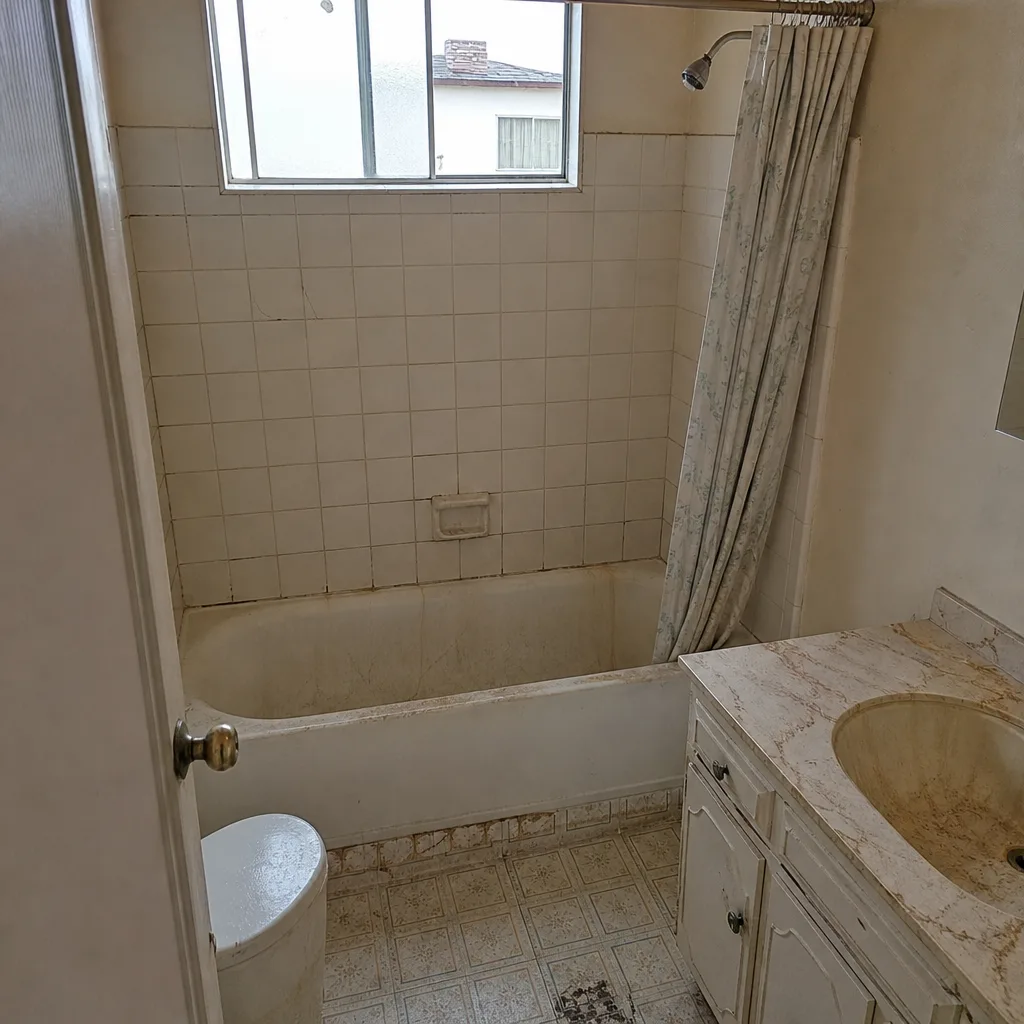 Before
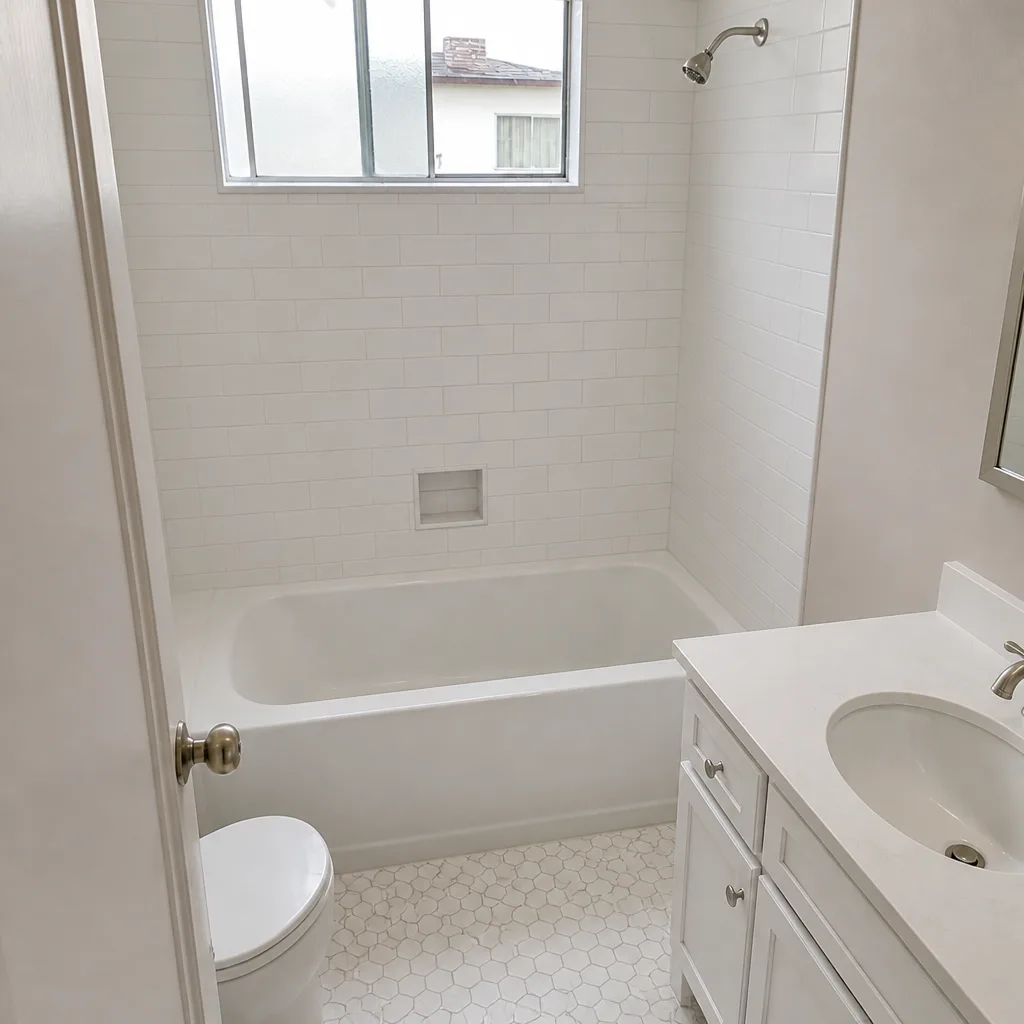 After
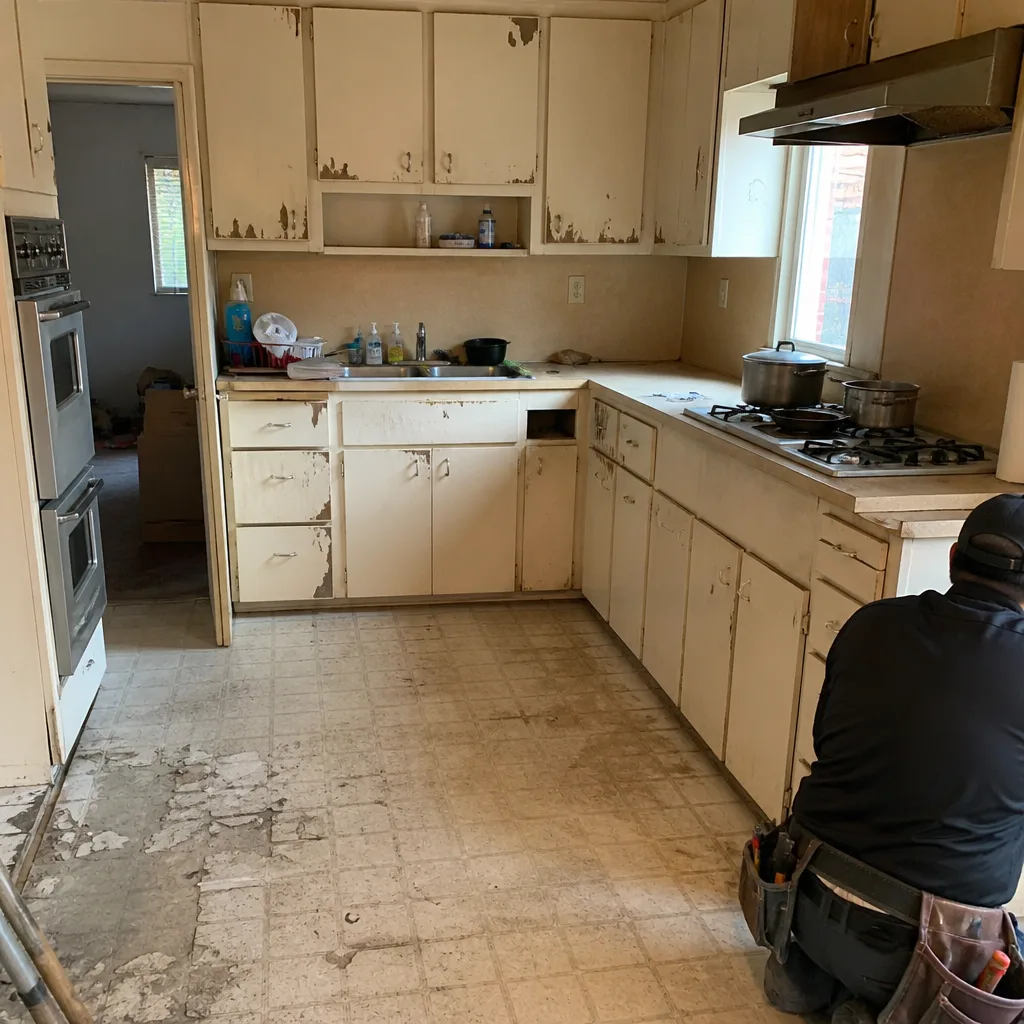 Before
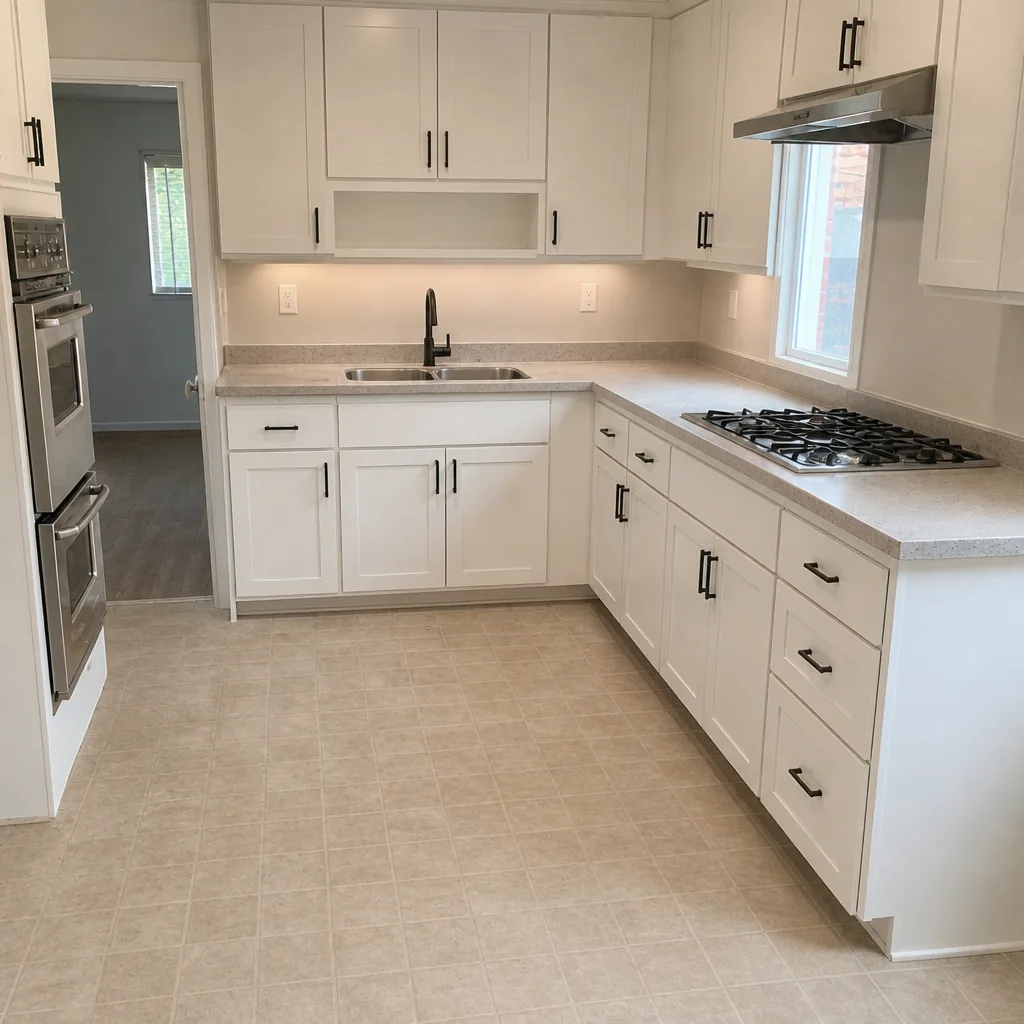 After
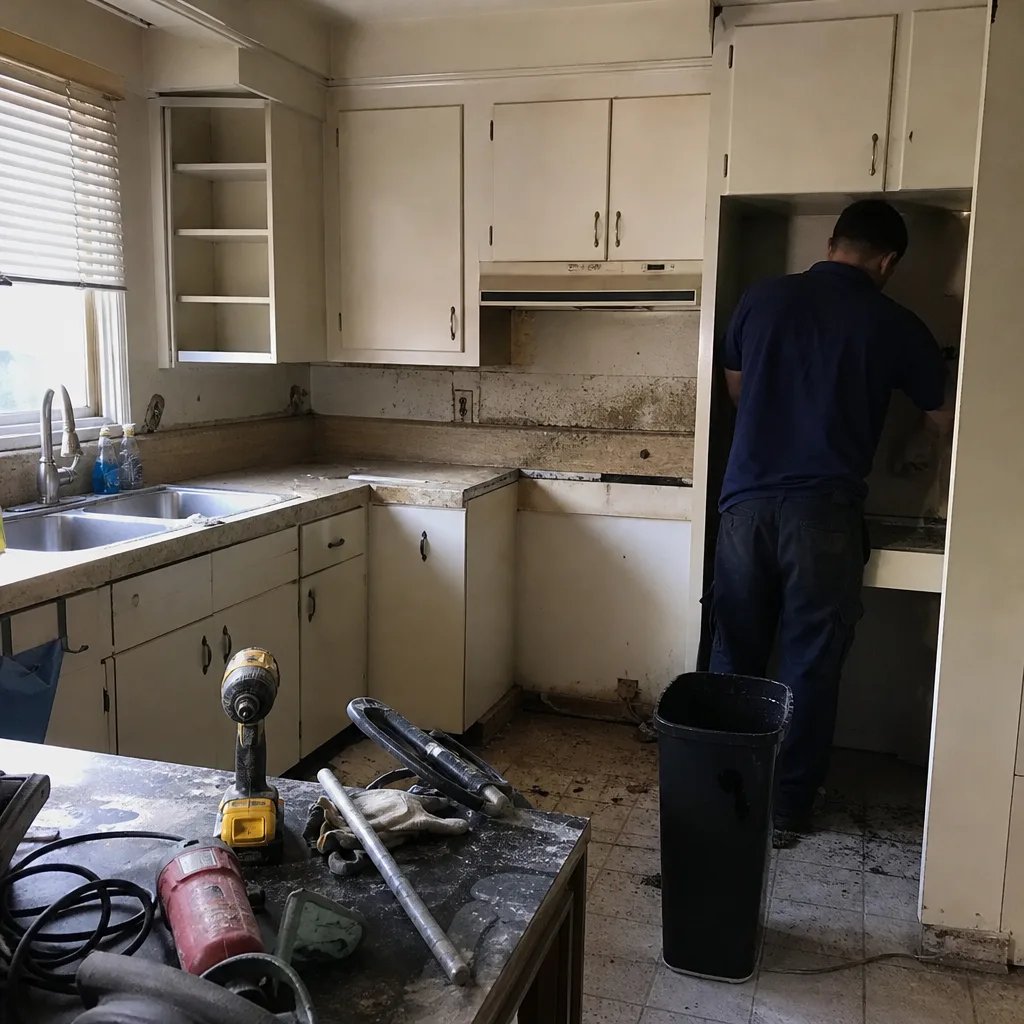 Before
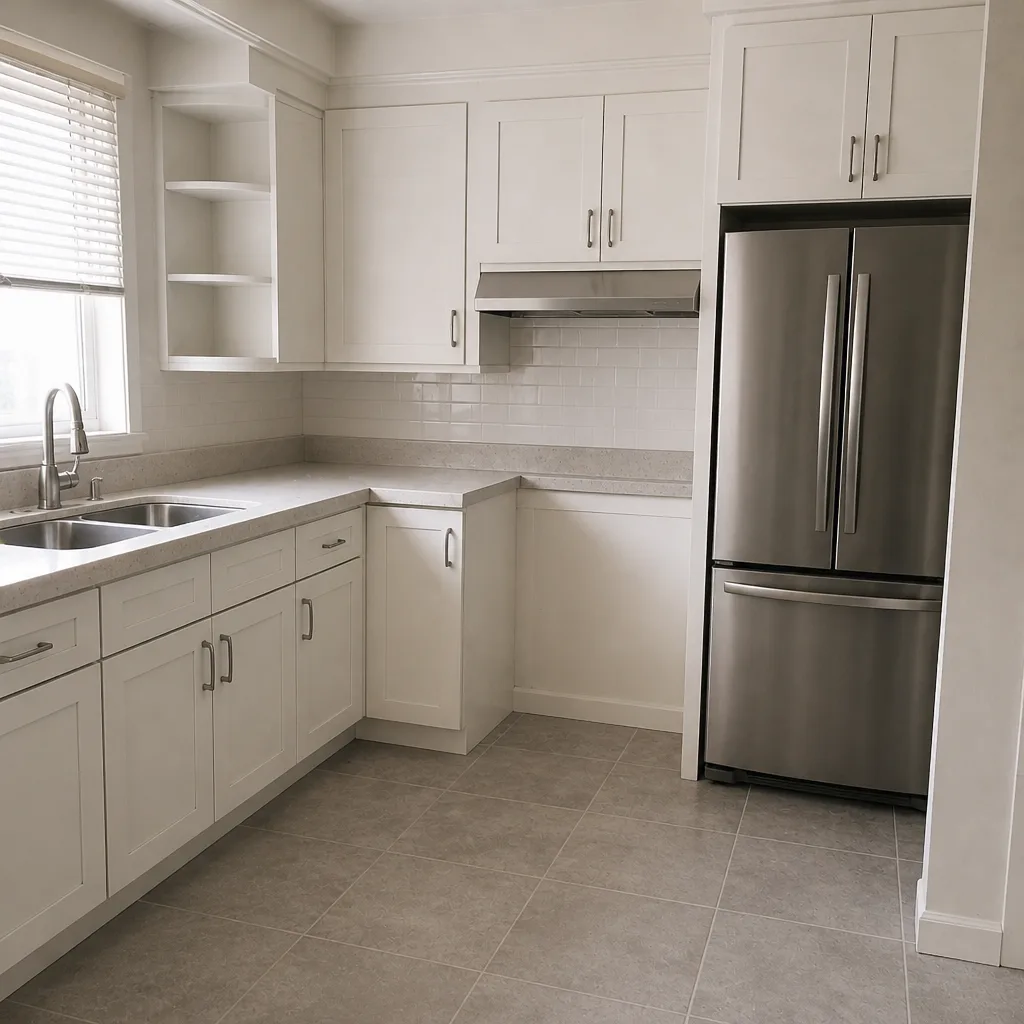 After
When to Call a Professional
Some work is fine to handle yourself; most isn’t. Call a licensed contractor when a project touches the electrical panel, gas lines, structural walls, or the roof framing. Those aren’t just permit questions; they’re safety questions, and getting them right the first time is why you hire a trained professional.
Call a general contractor when your project spans more than one trade. A kitchen remodel that includes cabinets, counters, plumbing, and electrical needs one accountable relationship. An addition, whether site-built or a prefab unit, needs permit coordination and inspection scheduling that a specialty sub can’t manage alone. An exterior project that combines pavers, fence, and roofing needs one schedule, not three.
If you’re planning a medium-to-large investment and you’d rather have one point of contact than a rotating cast, Construction Buena Park offers free estimates in Buena Park. Call (833) 348-5952. The estimate is free, it’s written line by line, and the price is set per job by that written estimate, so the number you get is the number that holds.
Frequently Asked Questions

Costs in Buena Park track the broader Orange County market, and the range depends on scope, materials, and how much of the existing structure stays. Rather than quote a ballpark, the right approach is to write your scope of work, then ask two or three contractors to price the same list. That produces ranges you can actually compare. Call (833) 348-5952 for a free written estimate that breaks out the line items.
Look up the contractor’s license number on the Contractors State License Board (CSLB) website. The record will confirm whether the license is active, what class it holds, and whether there are any disciplinary actions on file. Match the license to the exact company name on the bid, not just the individual. Then ask for workers’ comp and general liability certificates. Call (833) 348-5952 if you’d like to talk through what our verification process looks like before you schedule an estimate.
A B-license (General Building Contractor) is the right class for multi-trade residential work such as kitchen, bathroom, and addition remodels. A C-license is a specialty class for single-trade work like fence installation or paver work. If your project touches more than one licensed trade, hire the B-license general contractor. Call (833) 348-5952 to discuss which scope fits your project.
Only if the scope changes. A written contract with a change-order threshold means additions are priced and signed before the work is done, not after. Substitutions of specified materials should also require written approval. Our written estimate sets the price; the estimate is free and is broken out line by line, so you can see exactly what’s included. Call (833) 348-5952 for an estimate.
Yes. Any project that requires a permit gets one, and inspections are scheduled as part of the job. Confirm in writing before you sign that permits are included in the bid. We pull permits for work that needs them and coordinate the city inspections so the sign-off is on your schedule, not a surprise at the end. Call (833) 348-5952 with questions about a specific project.
Yes, when the contractor is set up as a full-property general contractor with trade relationships in each category. A single scope and a single schedule cut out the coordination gaps where projects stall. The key is confirming each category is genuinely covered by the contractor’s network, not informally subbed out. Call (833) 348-5952 to talk through a multi-trade project; estimates are free.
The Bottom Line
The right way to hire a contractor in Buena Park isn’t three bids compared on price. It’s a written scope, a verified license and insurance packet, a line-by-line bid review against that scope, and a contract with clear change-order and lien-waiver language. Do those four things and the bids you get are comparable, which means the decision stops being guesswork. Our technicians have up to 14 years of experience, and we’ve seen how much of a project’s outcome is set before the first nail goes in. The cheaper number isn’t the safer one until you know what’s in it.
Construction Buena Park offers free estimates across seven service lines, from driveway and pavers to roof and kitchen. One contractor, one contract, one point of contact. Call (833) 348-5952 to schedule yours. We answer 24/7. Fast dispatch from 7am to 7pm, Sunday through Friday.
Written by the team at Construction Buena Park.