Last updated November 17, 2026





Free written scope consultation - allowances, timeline, and change-order rules on paper before a single trade is scheduled
Seasonal Construction Care for Buena Park: Year-Round Homeowner’s Guide
Most home maintenance guides are written for places with four real seasons, and following one in Buena Park means winterizing things that never freeze and skipping the wind prep that actually matters. The worst damage to most Orange County homes shows up in October, not January, when Santa Ana winds arrive on air that’s already bone dry and push against roofs, fences and stucco that spent all summer baking. This guide throws out the Midwest calendar and replaces it with one built around the three weather events that shape a Buena Park property: the fall wind window, the December-to-March rain window, and six months of hard UV.
Quick Answer
Seasonal construction care in Buena Park runs on a three-event calendar, not four seasons: October Santa Ana wind prep (roof fasteners, fence posts, loose stucco, vent screens), December through March rain readiness (drainage slope, downspout extensions, flexible caulk), and summer UV protection (deck coatings, skylight seals, composite decking checks). A post-rain inspection in spring catches efflorescence, stucco cracking and paver joint washout before summer heat sets them. Build the calendar from your own permit records and material install dates, not from generic age assumptions.
Styles & brands we work with
- Kitchen remodeling
- Bathroom remodeling
- Home additions & ADU
- Roofing
- Windows & doors
- Driveway & pavers
- Fence
Table of Contents
- Why the Standard Seasonal Calendar Fails in Buena Park
- The October Santa Ana Wind Prep Checklist
- December to March: Rain Readiness for Orange County Homes
- The Summer UV Assault: Six Months of Hard Sun
- The Spring Post-Rain Inspection Checklist
- How to Build a Property-Specific Maintenance Calendar
- Materials That Hold Up in Buena Park’s Climate
- When to Call a Professional
Why the Standard Seasonal Calendar Fails in Buena Park
The advice you’ll find on most national home maintenance sites was written somewhere with a hard freeze, and it shows. It tells you to drain hose bibs in November, watch for ice dams, and check your snow load. None of that applies here. Buena Park sits in a mild, dry-summer climate where the ground doesn’t freeze and the roof never carries snow, so the failure modes on your property are completely different from what the generic calendar prepares you for.
What actually wears a Buena Park house down is a three-part cycle: wind, rain and sun.
- Wind: Santa Ana events in fall send dry, gusty air from the east, and they arrive when everything on your property is at its driest. Fences, roof edges and stucco take the brunt.
- Rain: Nearly all of the annual precipitation lands in a compressed December-to-March window, which means drainage has to work well for a few intense months and stay out of the way the rest of the year.
- Sun: From roughly April through September, UV exposure is the dominant force on anything horizontal – decks, roofs, skylights and sealants.
That’s the whole framework. Once you stop prepping for winter and start prepping for wind, rain and sun in the order they arrive, the maintenance list gets shorter and far more useful. A Buena Park homeowner who does the October wind walk-through and the spring post-rain inspection is already ahead of most of the neighborhood.
The October Santa Ana Wind Prep Checklist
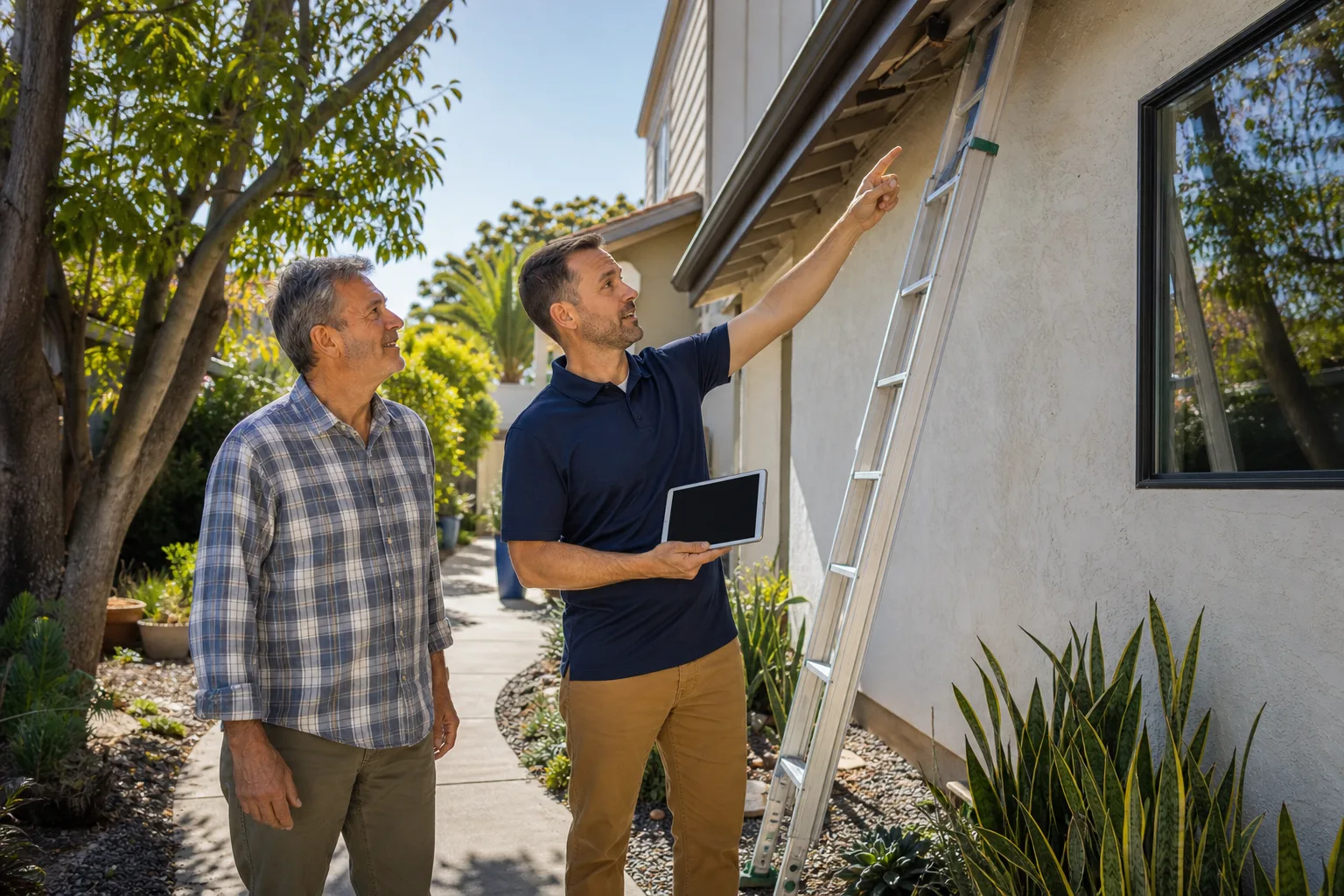
Santa Ana winds are the most underrated threat to a Buena Park property, and the prep window is narrow – late September into early October, before the first strong event. These winds are dry and gusty, and they hit a building that has spent five months losing moisture to the sun. Roof edges, fence posts and anything already loose are the first things to go.
Here’s the checklist we walk through on Buena Park homes each fall, in order:
- Roof fastener inspection. Walk the perimeter (or have it checked from the ground and at the eaves) for lifted shingles, loose ridge caps and exposed fasteners. A shingle that’s already curling at the corner of a Buena Park roof is a shingle that will peel in a gust. GAF, CertainTeed and Owens Corning systems are all engineered to rated wind uplift, but only when the fasteners and starter course are correct. A missed nail from the original install shows up in October.
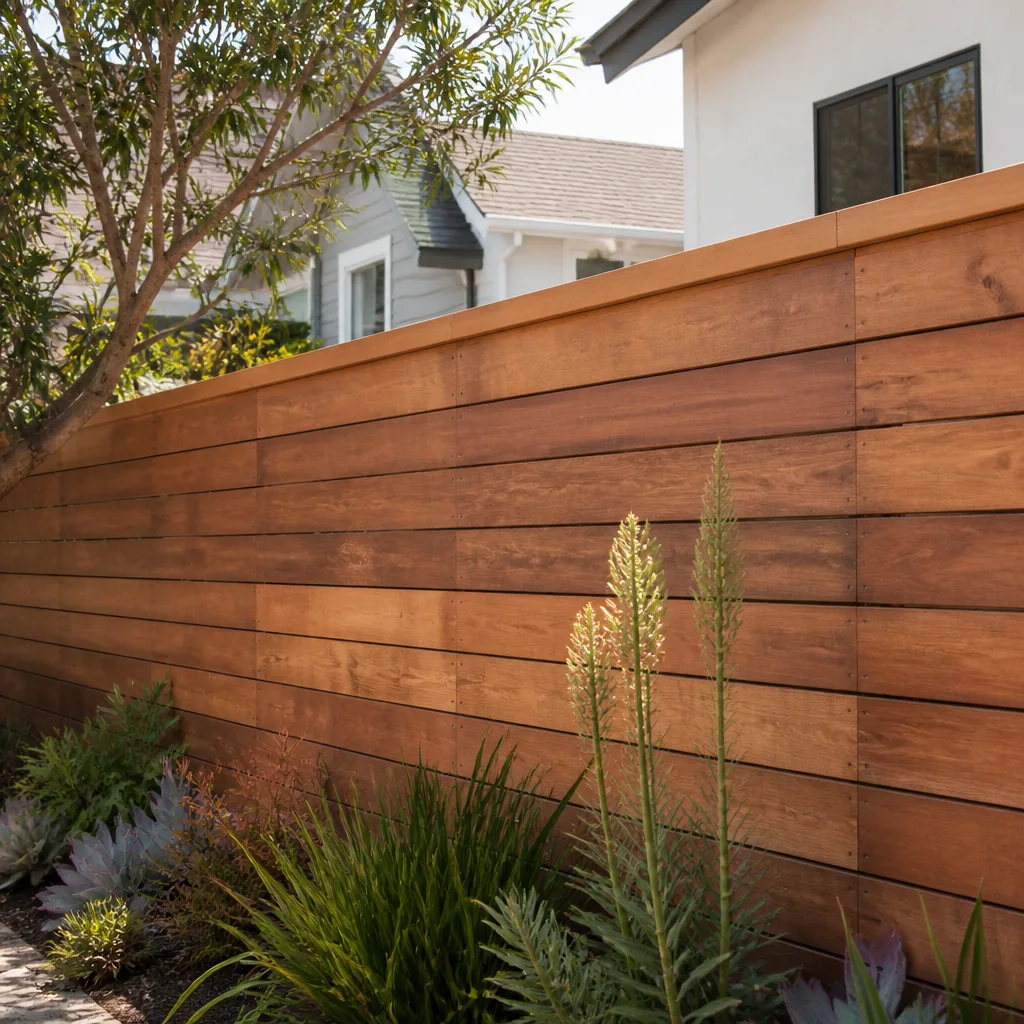
- Fence post lateral load. Grab each post and push it side to side. Any movement means the post is losing its grip on the soil, and a dry Santa Ana gust turns a wobble into a fallen panel. If several posts are loose, that’s a sign the fence footing wasn’t deep enough or the wood is failing at the base.
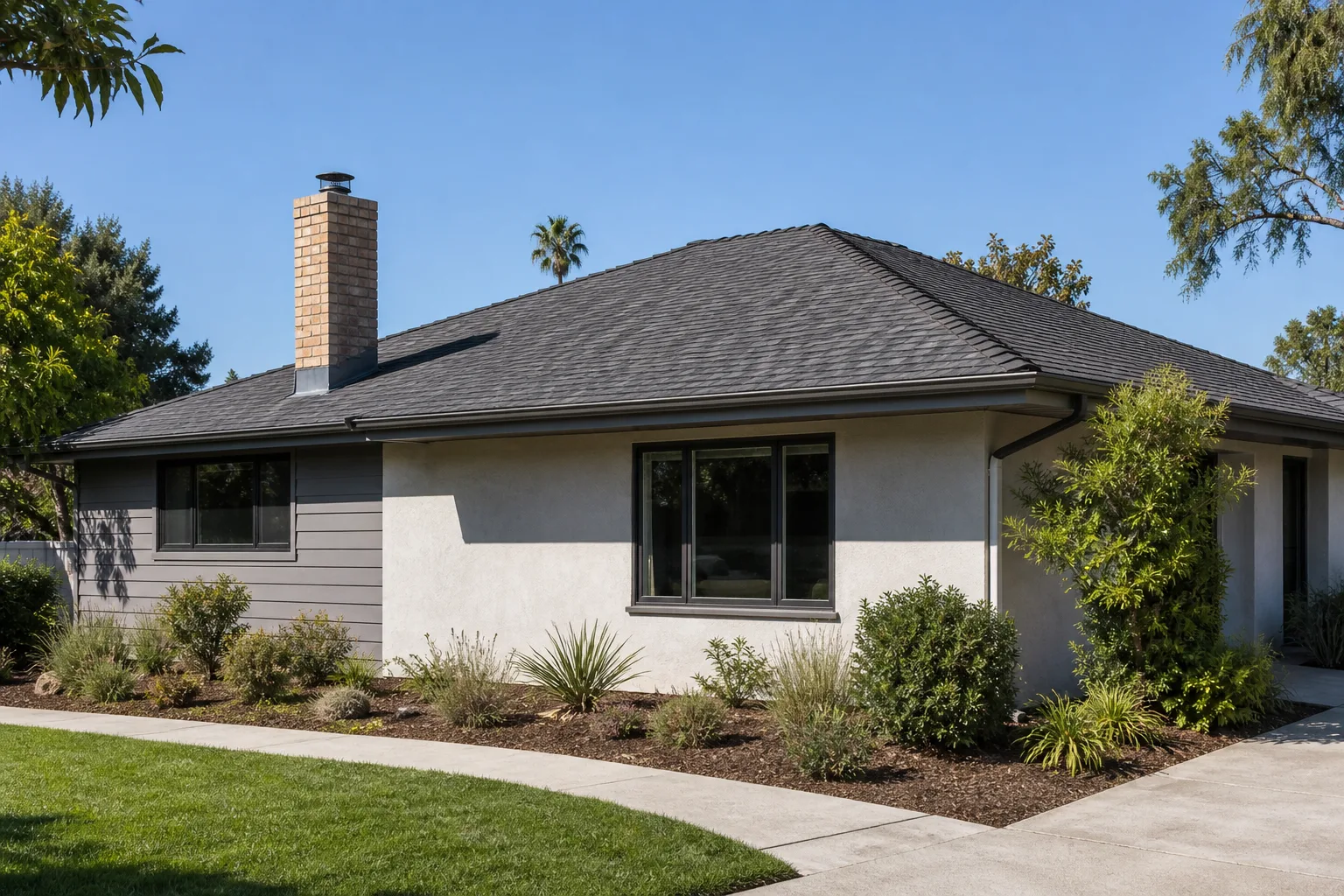
- Loose stucco identification. Tap the exterior walls with a screwdriver handle and listen for a hollow sound. Hollow patches mean the stucco has separated from the lath, and wind gets behind a loose patch and peels it. Pay extra attention to chimney sides, upper corners and anywhere a hose has been spraying for years.
- Vent screen integrity. Check the screens on attic vents, dryer vents and gable vents. A torn screen lets in wind-driven debris and, worse, embers and pests. This is a ten-minute check that prevents a much bigger problem.
Do this in early October and again after the first big wind event. If the roof or stucco inspection turns up a problem you can’t handle from the ground, that’s the moment to get it looked at rather than waiting for the rain.
December to March: Rain Readiness for Orange County Homes
When the rain finally arrives in Buena Park, it tends to arrive all at once. Nearly all of the annual precipitation falls between December and March, often in a handful of concentrated storms. That compressed window puts the entire drainage system on your property to the test in a few short weeks, and the failures are predictable.
Three things matter most in this stretch:
- Drainage slope. Around Orange County homes, hardscape and grading need to move water away from the foundation, not toward it. A patio or driveway that was poured flat, or a planter bed that’s settled over the years, sends stormwater straight at the stucco and the slab. If you see standing water within a day of a storm, that’s a slope problem, not a drainage-cleaning problem.
- Downspout extensions. The local soil here is heavy clay, which absorbs slowly and holds water. A downspout that dumps right at the foundation keeps that clay saturated for days after the storm passes. Extending the downspout a few feet further out to a splash block or a dry well makes an outsized difference on a Buena Park lot.
- Caulk formulations. Not all exterior caulk handles the temperature cycling we get here. A caulk that cures stiff will crack as exterior surfaces warm and cool through the rain window. You want a flexible, paintable exterior sealant rated for movement; the rigid stuff is fine on a joint that never moves, but it’s not what you want around windows and trim.
The best rain-readiness work happens in November, before the first storm. Clear the gutters, check the downspout extensions and confirm the drainage slope is doing its job. Once the storms start, you’re mostly reacting.
The Summer UV Assault: Six Months of Hard Sun
From roughly April through September, Buena Park gets six months of intense, direct sun, and UV is what ages a house here. It breaks down sealants, chalks paint, fades deck coatings and shrinks the gaskets around skylights. The work of summer maintenance is protecting horizontal and glazed surfaces before the sun gets to them.
The three highest-return items:
- Deck coating re-application windows. Wood decks and railings take the most UV of any surface on the property. Coatings break down on a cycle that depends on the product and exposure, so check the deck in early spring, before the summer UV ramps up, and re-coat while temperatures are moderate enough for the product to cure properly. Coating a deck in the middle of a heat wave rarely ends well.
- Skylight seal inspection. Skylights and any glass on the roof – Mr-Glass and ViewLux are both common in this market – are surrounded by sealant that hardens under UV. Once it hardens and cracks, summer sun bakes the joint and the first rain finds it. Inspect around every roof glass and metal flashing before summer.
- Composite decking checks. Composite decking doesn’t need coating like wood, but brands differ in maintenance cycles. TimberTech and Trex products have different surface formulations and different cleaning recommendations. Get familiar with the specific product on your deck rather than assuming every composite is maintenance-free; most need at least an annual wash and an occasional inspection of the fasteners and fascia.
Window and door lines like Therma-Tru and others are made to handle UV, but the perimeter seals are still the weak link. A quick visual pass around every opening each spring catches most of the problem before it becomes water damage.
The Spring Post-Rain Inspection Checklist
Spring, right after the rain window closes and before the summer heat sets in, is the single most important inspection on the Buena Park calendar. Why the timing matters: problems caught in spring get fixed while the weather is mild. The same problems left through summer get baked into the material and cost more to correct in fall.
Walk the property in this order:
- Efflorescence. That white, powdery staining on stucco, brick or pavers is mineral salt pushed to the surface by moisture. It’s not a crisis on its own, but it’s a signal that water is moving through the material and drying out. Look for efflorescence along the base of walls, on the chimney and on any paver surface that sits against the house.
- Stucco cracking. Hairline cracks are normal in a stucco house, but the rain window will widen any crack that water gets into. Trace every crack on the exterior. A crack wider than a credit card, or one that’s stair-stepping across the wall, is worth a professional look.
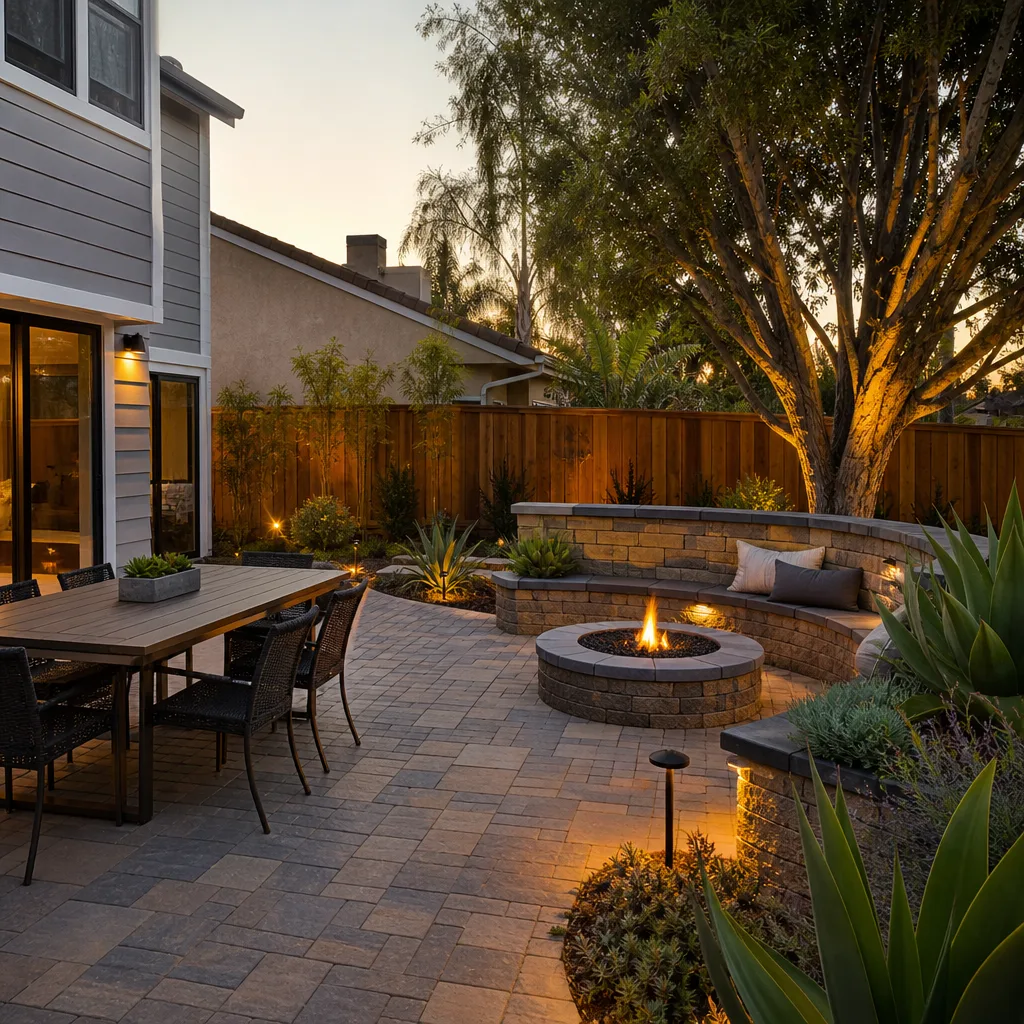
- Paver joint washout. Paver installations – Belgard, Unilock, Techo-Bloc and Tremron systems all rely on a properly filled joint – will lose joint sand to heavy rain and runoff. Washed-out joints let water into the base, and once summer hits, a loose paver is a cracked paver. Refill the joints before summer.
- Fence and gate condition. After a wet winter, wood posts rot faster, and metal gates can shift. Check for softness at the base of posts and re-hang any gate that drags.
If you have a driveway & pavers installation, the joint washout check is the highest priority. If your fence took a beating over the winter, a walk of the entire fence installation line is worth the effort before summer.
How to Build a Property-Specific Maintenance Calendar
The most useful maintenance calendar isn’t the one on a blog; it’s the one built from the actual history of your buiding. Generic age assumptions get it wrong. A Buena Park house with a 15-year-old roof that was installed to spec and vented properly may have more life left than a 10-year-old roof that wasn’t. The condition and the install details matter more than the age.
Here’s how to build your own calendar:
- Pull the permit records. The city of Buena Park has permit records for roofs, additions, fences, pavers and most structural work. Your permit history tells you when material was installed, who did the work and what was inspected. That’s a far better basis for a maintenance schedule than the year the house was built.
- Record the material install dates. For every major system – roof, windows, fence, deck, pavers – write down the install date and the product. A Therma-Tru door and a builder-grade slider have different service lives. A GAF roof and a low-end shingle roof have different wind ratings. The product name matters.
- Set the three anchor dates. Put October (wind prep), November (rain readiness) and spring (post-rain inspection) on your calendar as recurring reminders. Everything else hangs off those three dates.
- Tie each reminder to the material. The deck reminder should say what product the deck is and what the next maintenance step is. The roof reminder should name the shingle system and the warranty requirements.
- Review it once a year. After each fall, update the calendar based on what the inspections found.
Building your own calendar takes an afternoon. Once it’s done, you’re no longer relying on generic advice written for a climate you don’t live in. If you’re planning a larger project, the home additions & ADU side of the property follows the same wind, rain and sun logic, just on a longer timeline.
Materials That Hold Up in Buena Park’s Climate
Material choice is a seasonal maintenance decision as much as a design one. The right product means less work each year; the wrong one means a recurring repair list. Here’s how the major categories sort out for this climate.
- Roofing systems. GAF, CertainTeed and Owens Corning are the three most common systems on Buena Park homes, and each has documented wind uplift ratings. What matters for seasonal care is having the install details on file – fastener pattern, underlayment type, install date – so the fall inspection has something to check against.
- Fencing. Commercial-grade lines including Master Halco, Ameristar, Jerith and Bufftech are engineered for wind load better than generic lumber-yard stock. On a windy Buena Park lot, that difference shows up in the first Santa Ana season.
- Pavers and hardscape. Belgard, Unilock, Techo-Bloc and Tremron all publish load ratings and design libraries. The joint-fill spec and the base prep matter more than the brand, but the brand tells you what warrantee and installation guidance you can rely on.
- Windows and doors. Therma-Tru and Mr-Glass products are common here. The perimeter sealant around them is the part that ages, so the spring inspection should include every opening.
- Exterior cladding. James Hardie fiber cement siding handles UV well; stucco performs differently and needs the crack inspection every spring. Both are fine systems; they just need different calendar lines.
- Decking. TimberTech and Trex composites need less than wood but not nothing. Different surface formulations mean different cleaning cycles, so match the care to the product.
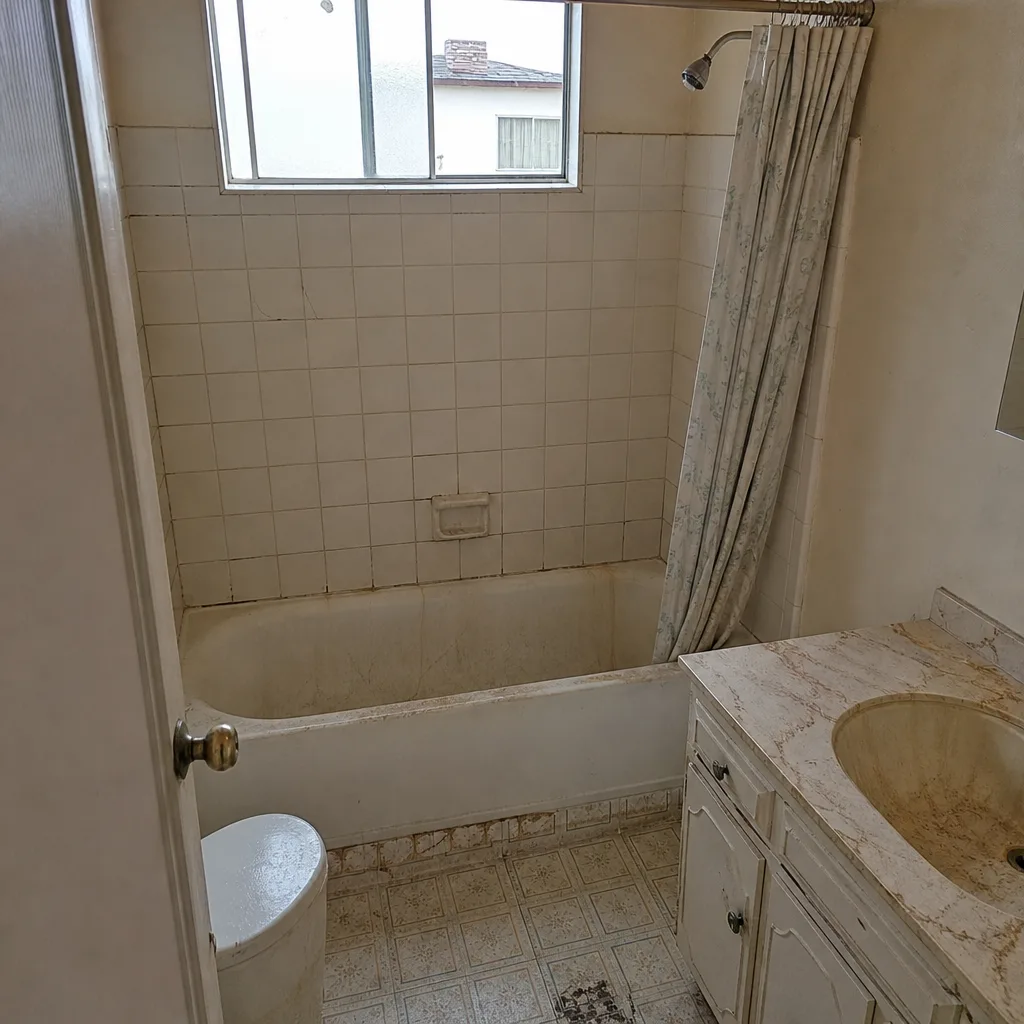
- Interior surfaces affected by exterior performance. Kitchen and bath finishes – KraftMaid or Wellborn cabinetry, Cambria or Silestone or Caesarstone quartz, Kohler, Grohe or Toto fixtures – are protected by a well-performing exterior. When the roof or window seals fail, those are the finishes that take the water damage.
If you’re planning a remodel and need to sequence it around the weather calendar, the full range of Construction Buena Park services runs from the driveways to the roofline, which means the maintenance logic can be built into the design from the start.
Common Mistakes to Avoid
- Following a snow-belt maintenance calendar. If you’re winterizing hose bibs, checking ice dams or worrying about a frozen line, you’re doing work that doesn’t help a Buena Park house. The two seasons of concern here are wind and sun, not winter.
- Skipping the October wind walk-through. The single most common mistake we see is waiting for the first wind advisory to check the roof and fence. By then, it’s too late to fix anything before the gust arrives.
- Ignoring drainage slope until it floods. A patio that pools water in a storm is a design problem, not a roof problem. Cleaning gutters won’t fix it. Correcting the slope is the actual fix, and it’s much easier to do in dry weather.
- Using a stiff caulk on a moving joint. Caulk that cures rigid around windows and doors will fail within a season or two of temperature cycling in this climate. Flexible exterior sealant is the correct choice on anything that moves.
- Assuming composite decking is maintenance-free. TimberTech and Trex both recommend periodic cleaning and inspection. Treating a composite deck like a concrete slab means finding the failure at year eight instead of year fifteen.
- Basing the calendar on the home’s age instead of the material’s. A 20-year-old roof with a documented good install and correct venting can outlast a 10-year-old roof that wasn’t detailed properly. The permit record and install date beat the year the house was built.
- Caulking over a wet joint. Sealant sprayed at a joint during a storm window never cures; it traps moisture and peels. Sealant work belongs in dry weather, and there’s plenty of that in Buena Park.
See the difference
 Before
 After
 Before
 After
 Before
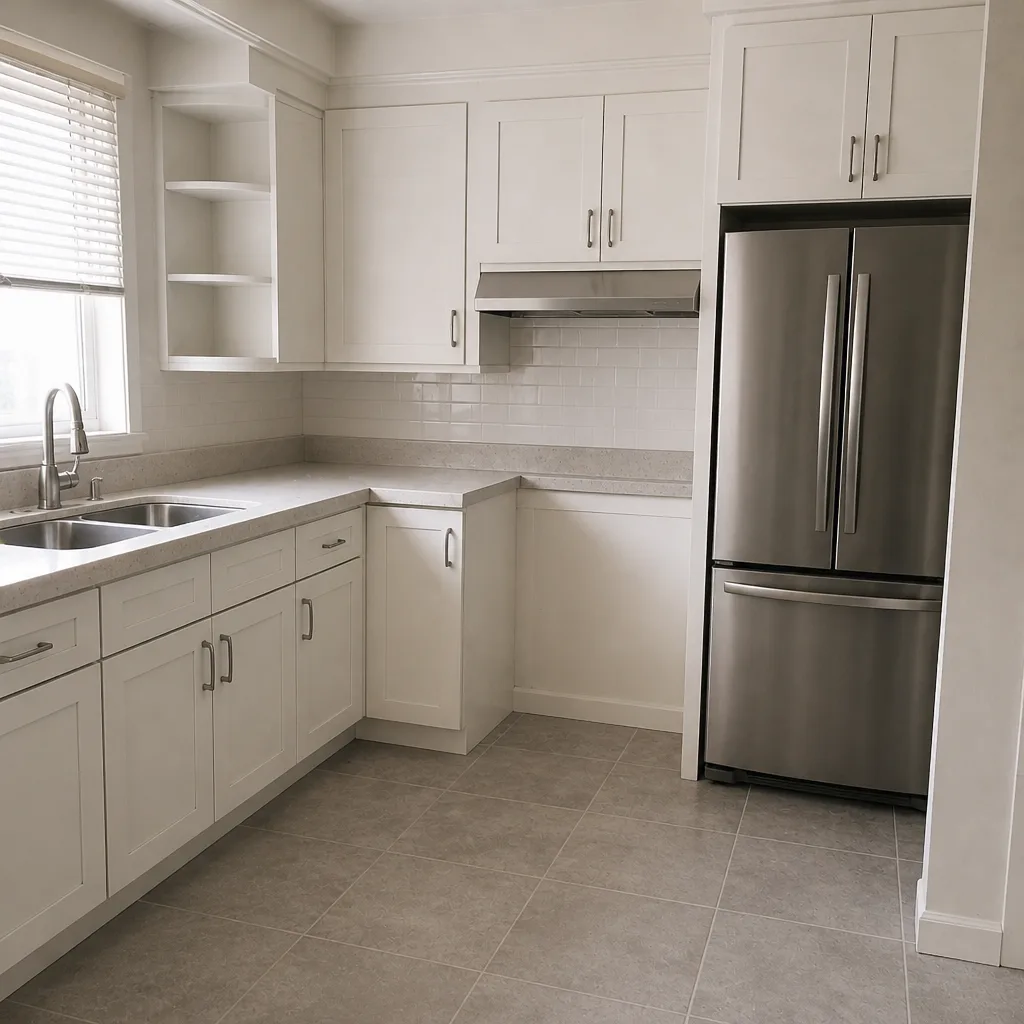 After
When to Call a Professional
Some of the checklist work is safe to do yourself: pushing on fence posts, tapping stucco, cleaning gutters, extending downspouts. Other items need a trained eye and, more importantly, safe access. Anything on the roof itself – fastener inspection, shingle condition, skylight seal inspection – involves height and wind exposure, and the wrong move can turn a small repair into a much bigger one. Roof and stucco repairs also often require permits, so the work needs to be documented correctly. Electrical, gas and any work that touches windows or doors in a structural way is a job for a licensed trade. And if the spring inspection turns up cross-wall stucco cracking, widespread paver washout or efflorescence along the foundation, that’s a sign of water penetration rather than a cosmetic issue, and it deserves a professional assessment before summer locks it in. Construction Buena Park offers free estimates in Buena Park – call (833) 348-5952. Our technicians have up to 14 years of experience, and the written estimate sets the final price.
Frequently Asked Questions
The October list is wind-focused: inspect roof fasteners and shingle edges, push-test fence posts, tap the stucco for hollow patches, and check every vent screen. October is when Santa Ana winds arrive, and they hit a property that’s already dry from five months of sun. Call (833) 348-5952 for an exact quote – estimates are free.
No, not in the snow-belt sense. Buena Park doesn’t get frozen lines or ice dams, and the ground doesn’t freeze. The “winterization” that matters here is rain readiness: drainage slope, downspout extensions and flexible exterior caulk, done in November before the December-to-March rain window opens.
The spring post-rain inspection matters most. It catches efflorescence, stucco cracking, paver joint washout and fence damage in the window between the rain and the summer heat, when repairs are easiest and least expensive. Catching these in spring avoids the cost of letting summer bake the damage in.
The cycle depends on the product and how much direct sun the deck gets. The general approach is to check the coating in early spring before the summer UV ramps up, and re-coat while temperatures are moderate enough for proper curing. Call (833) 348-5952 to schedule a free estimate on a deck inspection.
Yes. TimberTech and Trex products need less than wood but not zero: an annual wash and a periodic inspection of fasteners and fascia. Each brand has its own recommended cleaning cycle, so match the care to the specific product on your deck rather than assuming all composites are the same.
No. We quote the work in writing, and the written estimate sets the final price. If the inspection turns up a hidden issue, you’ll get the scope and price change documented before anyone continues. We pull permits where they’re required and the work is inspected. Call (833) 348-5952 – estimates are free.
The Bottom Line
Buena Park’s climate doesn’t have four seasons, it has three events: the October Santa Ana winds, the December-to-March rain window and six months of hard summer UV. A maintenance calendar built on those three anchors does more for a Buena Park property than any generic post from a snow-belt site. The October wind checklist, the November rain readiness and the spring post-rain inspection catch almost every problem before it becomes expensive. Build the calendar around your own permit records and material install dates rather than the age of the house, and you’ll spend less time guessing and more time enjoying the place. One contractor from the driveway to the roofline handles the work when it’s time.
Call (833) 348-5952 for a free estimate. We answer 24/7, with fast dispatch from 7am to 7pm, Sunday through Friday. From the driveway & pavers to the fence installation line, the home additions & ADU side of the property and every trade in between, Construction Buena Park works under one contract with real brand choice in every category. Skip the sub-contractor shuffle and start with a written line-item quote.
Written by the team at Construction Buena Park.